
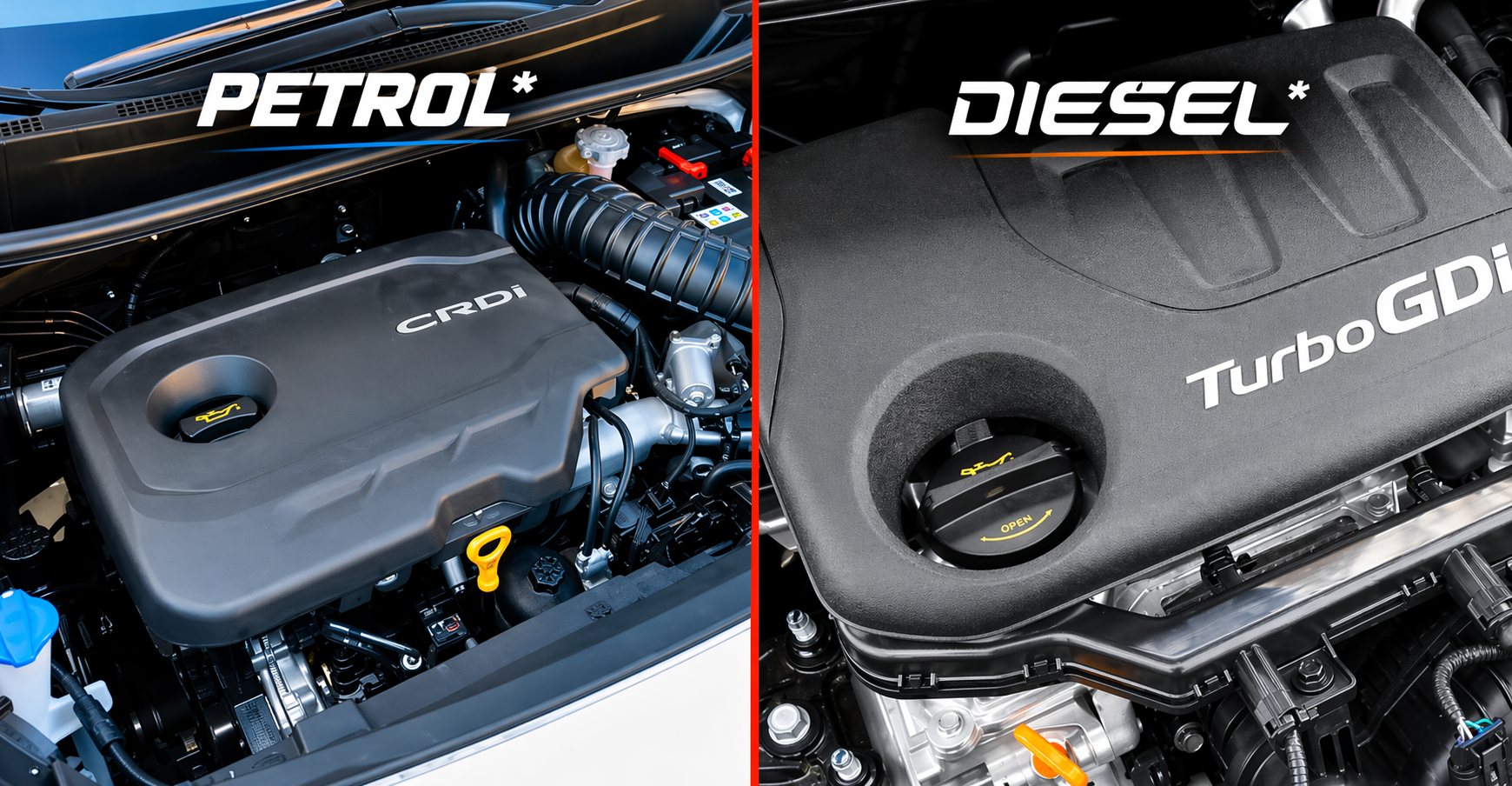
Petrol Engine vs Diesel Engine are two very famous engine out there in the market which do not need any introduction. But after the stringent rules from the government diesel buyer are in dilemma that should they opt diesel in 2026 or should they go for a Petrol car? So in this article we will try to clear the differences and the confusion between these two engines so that the buyer will be able to take a right decision.
Difference Between Petrol Engine And Diesel Engine
Many of us love petrol engine whereas some really like the grunt of the diesel engine. we will try to differentiate between both engine’s potential with respect to the working principle. with the learning of both the engines we will try to answer many other questions related to these two engines.
First to understand the key differences among the two engines we should understand the working principle of the engine and understand the differences between the Petrol and Diesel as a fuel.
So first of all we should understand the differences between both the fuels. Both have different chemical properties. These differences decides what will be the construction and what will be the design of the particular engine. For understanding the differences we need to understand the fundamental nature of the petrol and diesel.
PETROL Fuel And Petrol Engine
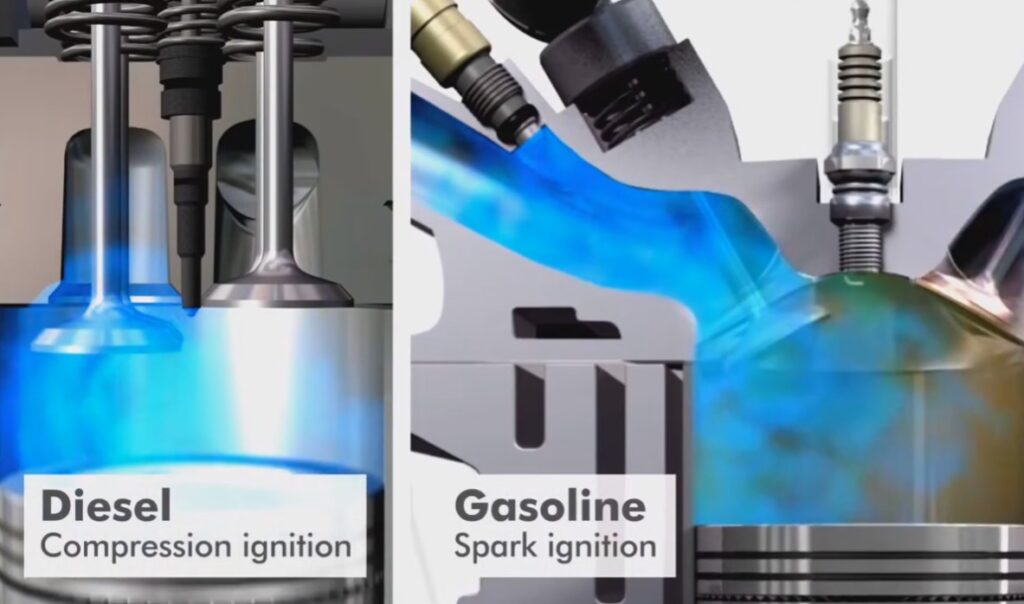
Highly flammable liquid but it ignites in different conditions from diesel. It has less energy than the Diesel in per liter of volume. Petrol Flash Point Temperature is very low that is why in only a little spark petrol is able to ignite.
A fuel whose flash point temperature is low will be able to get vaporize more easily. These vapors gets spark in the combustion chamber of petrol. That is why a spark plug is needed in a petrol engines. The flash point temperature of the petrol is -43 degree. In a petrol engines there is less compression of air is needed. So for Air intake there is a throttle body. It requires less compression than a diesel engine means at low temperature the petrol is able to burn. It only require a spark. So in a petrol engines the ignition is achieve by using its property of high vaporization.
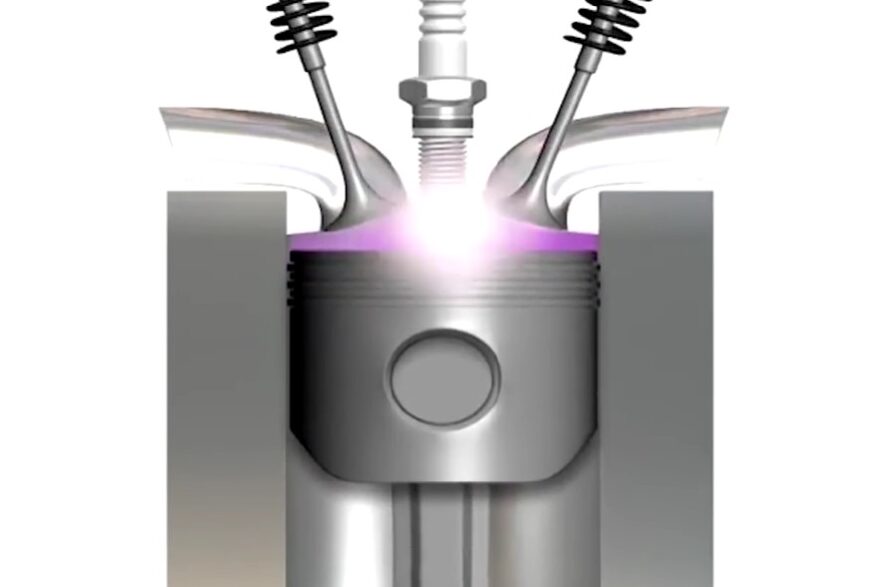
Some Petrol engines also contain Turbo for air intake so they are Turbocharged Petrol Engines. In a Naturally aspirated engines the air is made available using a throttle body so there is an Intake manifold present in petrol engines.
Petrol also have low freezing point which means it does not get freeze easily. Petrol engine works fine in every weather conveniently. It can work better in an cold environment also. These engines are light weight and produces less vibration.
DIESEL Fuel and Diesel Engines
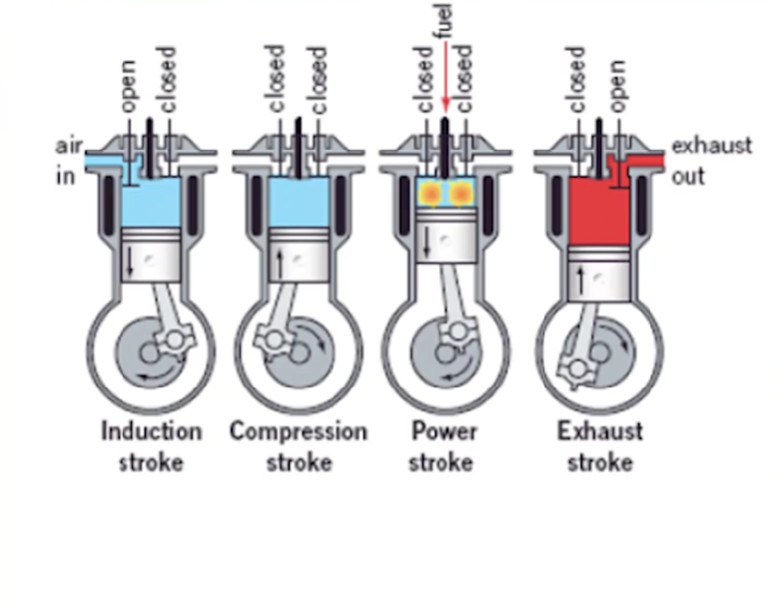
Diesel flash point temperature vary between 52 to 96 degree temperature. It is much higher than the petrol. Which means diesel do not get vaporized much easily. So a spark plug is not needed in a diesel engine. To get a spark in this engine different technique is applied. At the same time the diesel has another property that it can get burn easily at a certain temperature which is known as Self Ignition Temperature. This temperature is higher for Petrol and that is why this technique is not used for petrol engines. The Diesel engine works on its SIT property i.e. ‘Self Ignition Temperature‘ or an ‘Autoignition Temperature‘ property which is lower for Diesel. Its a temperature at which any flammable substance get ignite by self. So in diesel engines Compression Ignition is used at the place of Spark Ignition. We have to achieve SIT in order to burn diesel. This temperature is achieved by highly compressing the intake air. This high compression creates more pressure and thus increase temperature also. And at this temperature the diesel gets burn and there is a blast in the combustion chamber.
The SIT of a petrol engine vary between 247 to 280 degrees but for Diesel the Self Ignition Temperature is 210 degrees which is much lower than petrol. But diesel’s flash point temperature is higher and that is why a spark plug is not needed in a diesel engine.
Diesel is thicker and gets freeze in cold environment so there are issues in cold environment. The diesel engines are usually heavy engines and creates more vibrations. But they produce high torque and gives good punch at low end. The diesel engines uses more oil and more coolant. It is a more carbon producing engines. A common turbo charger is used to provide compressed air to this engine.
Diesel engine undergoes high blast so the valve and the block walls should be a better quality and should be of good strength. That is why the diesel engines are heavier than a petrol engine. The 4 stroke process of both the engines are same but the working principle of both will be different. The higher compression needs more air so a diesel engine needs a turbo which help in providing more air, at the same time the engine volume is large because more air is needed in the chamber to get compressed.
Also Read: Difference between FGT turbo and VGT turbo
Petrol Engine vs Diesel Engine Efficiency
The blast in a diesel engine is very strong due to which a strong engine construction is needed. The compression has to be more in diesel engine enough to accommodate large amount of gases easily. Means we have to create high temperature in a combustion chamber so that ignition become easy. Because diesel is more waxy and creates more energy so it produces more power and torque. More power conversion means more torquey engine and in a diesel engine this conversion is very efficient.
We need to spray the diesel with a very high pressure also so that ignition becomes strong. Diesel freezes early than a petrol because diesel is thick and it has purities and impurities too. It contains paraffine wax dissolved in it which is more viscous. So it produces even 15 times more energy than petrol.
Also Read: Which is better Verna 1.5 Turbo vs Virtus 1.5 TSI
Petrol Engine vs Diesel Engine mileage
The power and per liter energy in diesel engine is much much higher this is a reason of a diesel engine is torquey and it is more fuel efficient. This is also a reason diesel engines are heavy. The outlet valve in diesel engine is bigger and this engine produce more exhaust gases.
Which is better diesel or petrol engine?
Diesel car is first choice for enthusiasts and the power and torque they provide is great. But there are discouragement about the diesel cars due to their high carbon generation property so for long term car buyer who do not want any kind of worry of discontinuation Petrol is a better option. So it depends on person’s need that which engine should you buy, in which terrain you are running your vehicle. Long term purpose it will solve or not. Decide whether you want power or reliability.


1 thought on “Petrol Engine vs Diesel Engine which Is Best”