
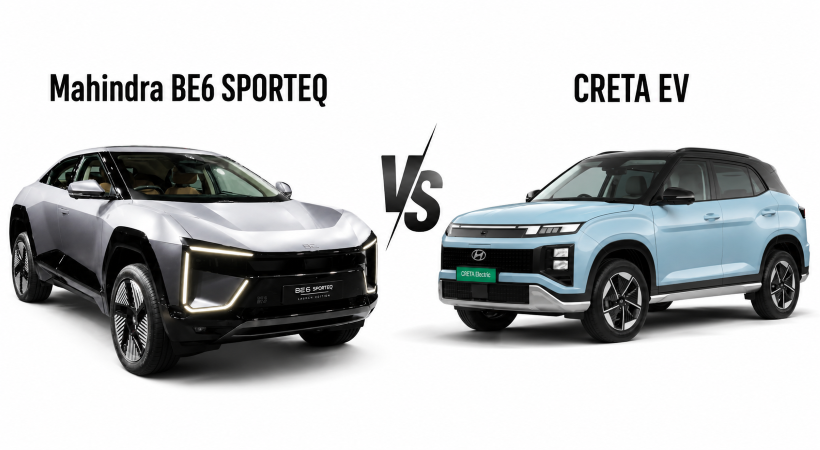
The electric SUV market in India has become much more interesting with the arrival of the Mahindra BE 6 SPORTEQ. It goes up against cars such as the Hyundai Creta Electric, but the two take very different approaches to electric mobility. If you are planning to buy an electric SUV in the ₹18–27 lakh price range, the Mahindra BE 6 SPORTEQ vs Hyundai Creta Electric Comparison is worth looking at closely.
The Creta Electric is positioned as a practical, familiar family SUV, while the BE 6 SPORTEQ brings a much more performance-focused package with rear-wheel drive, larger battery options and significantly higher power.
There is also an interesting twist: both can be purchased with a Battery-as-a-Service (BaaS) option, which lowers the upfront price but adds a per-kilometre battery payment.
So, which one makes more sense?
Let’s compare the Mahindra BE 6 SPORTEQ vs Hyundai Creta Electric on price, variants, battery, range, performance, charging and BaaS—and, most importantly, which one I would recommend to different types of buyers.
Mahindra BE 6 SPORTEQ vs Hyundai Creta Electric: Key Differences
| Specification | Mahindra BE 6 SPORTEQ | Hyundai Creta Electric |
|---|---|---|
| Starting price | ₹19.45 lakh | ₹18.03 lakh |
| BaaS starting price | ₹11.45 lakh + ₹3.75/km | ₹10.99 lakh + ₹3.90/km |
| Battery options | 59, 70, 79 kWh | 42, 51.4 kWh |
| Maximum power | 210 kW | 126 kW / 171 PS |
| Torque | 380 Nm | 255 Nm |
| Drive type | RWD | FWD |
| Maximum claimed range | 683 km | 510 km |
| DC charging | 20–80% in around 20 min | 10–80% in around 39 min |
| Length | 4,371 mm | 4,340 mm |
| Wheelbase | 2,775 mm | 2,610 mm |
| Character | Sporty/performance-focused | Family-focused |
Prices are ex-showroom. Range figures are claimed MIDC figures.
The numbers already tell an interesting story. The Creta Electric has the lower entry price, but the BE 6 SPORTEQ offers substantially more battery capacity, power and claimed range.
BE 6 SPORTEQ vs Creta Electric: Price Comparison
The Hyundai Creta Electric starts at around ₹18.03 lakh ex-showroom, making it slightly cheaper than the BE 6 SPORTEQ’s ₹19.45 lakh starting price. Hyundai’s official website currently lists the Creta Electric from ₹18,02,800.
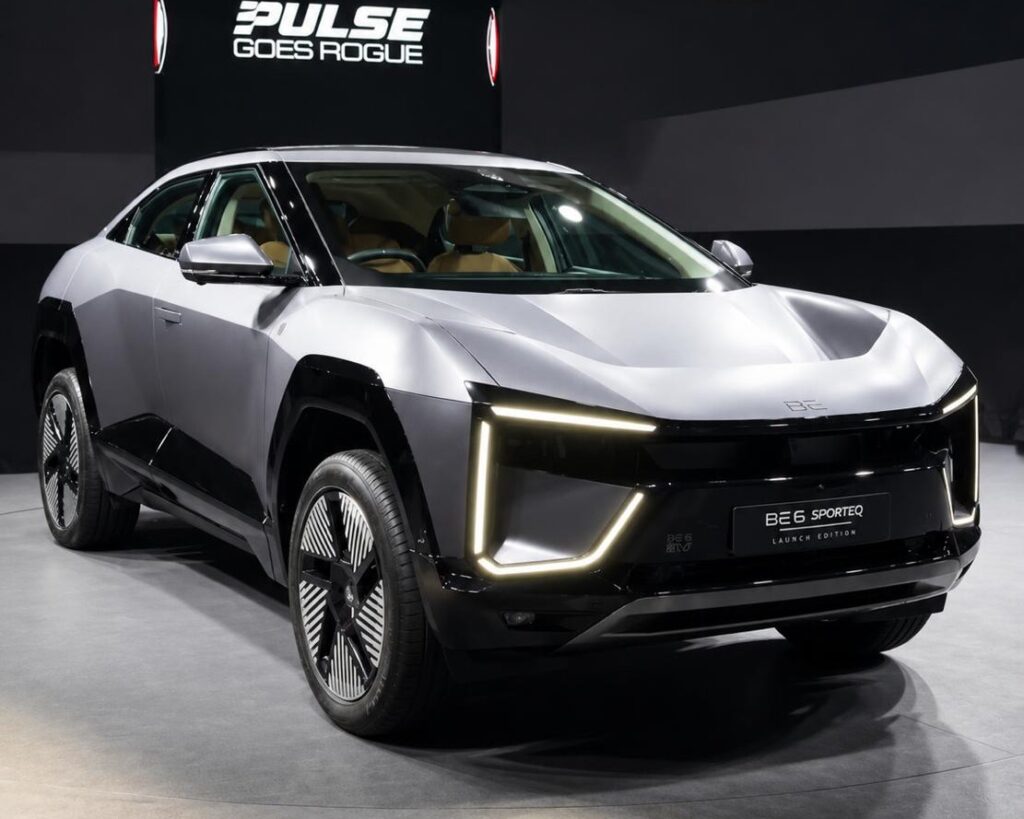
The BE 6 SPORTEQ starts at ₹19.45 lakh for the 59 kWh SPORTEQ One and goes up to ₹26.95 lakh for the 79 kWh SPORTEQ Four and Launch Edition. Mahindra has also introduced a new 70 kWh battery option between the existing 59 kWh and 79 kWh packs.
Mahindra BE 6 SPORTEQ price
| Variant | Battery | Ex-showroom price |
|---|---|---|
| SPORTEQ One | 59 kWh | ₹19.45 lakh |
| SPORTEQ Two | 59 kWh | ₹20.95 lakh |
| SPORTEQ Three | 59 kWh | ₹21.95 lakh |
| SPORTEQ Three | 70 kWh | ₹22.95 lakh |
| SPORTEQ Three Plus | 70 kWh | ₹23.95 lakh |
| SPORTEQ Three Plus | 79 kWh | ₹24.95 lakh |
| SPORTEQ Four | 79 kWh | ₹26.95 lakh |
| Launch Edition | 79 kWh | ₹26.95 lakh |
Mahindra’s official price list confirms that BaaS is offered on the 59 kWh SPORTEQ One and Two, rather than across the complete range.
Hyundai Creta Electric price range
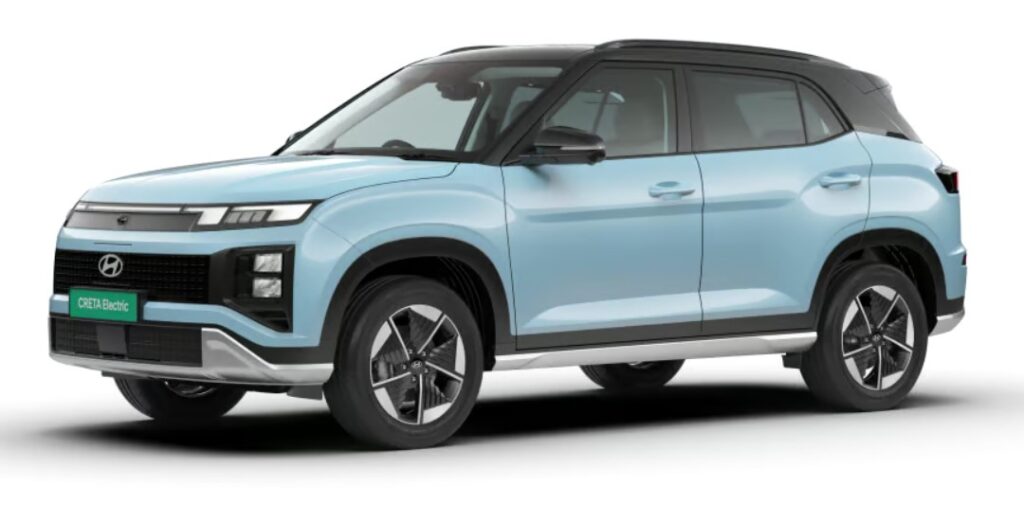
The Creta Electric is available with 42 kWh and 51.4 kWh battery packs, with prices in the roughly ₹18–25 lakh range depending on variant, trim and special edition. The price list you provided shows the range extending to ₹24.70 lakh for the higher-spec versions.
This makes the price comparison quite simple:
Creta Electric wins on entry price.
BE 6 SPORTEQ offers more battery and performance as you move up the range.
Variant-Wise Comparison: Which One Makes More Sense?
The BE 6 SPORTEQ range is actually easier to understand if you look at it according to battery size.
The 59 kWh SPORTEQ One is the entry point and claims a 548 km range. The SPORTEQ Two uses the same battery but costs ₹1.50 lakh more.
The interesting variant is the 70 kWh SPORTEQ Three at ₹22.95 lakh. It claims a 651 km range, which is only around 32 km less than the 79 kWh version’s 683 km claim.
That makes the 70 kWh version particularly attractive if range is important but you don’t want to spend ₹25–27 lakh.
The 79 kWh versions are aimed at buyers who simply want the maximum range and performance available in the SPORTEQ lineup.
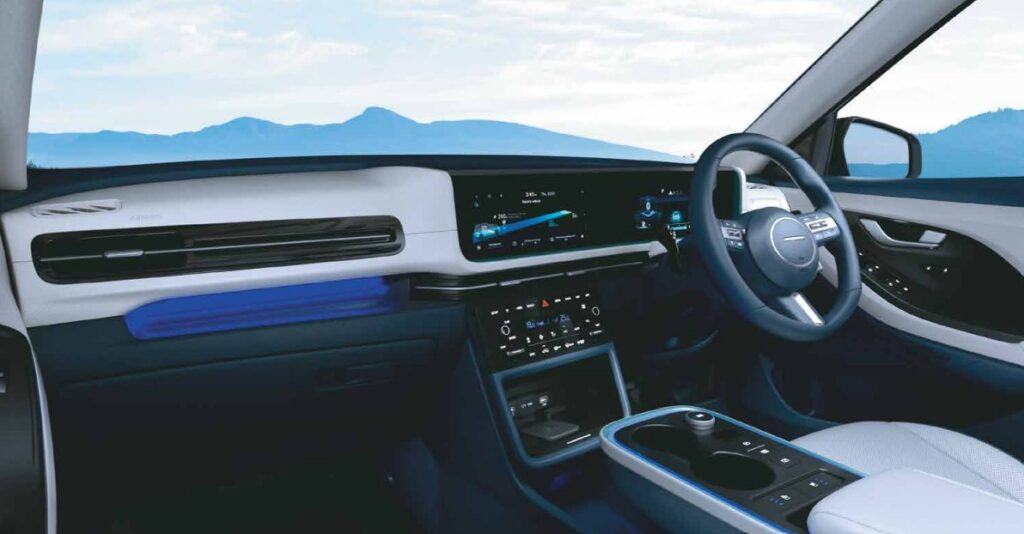
The Creta Electric takes a more conventional approach.
Its 42 kWh battery is available across several variants, while the 51.4 kWh Long Range battery is available on selected higher trims. Hyundai quotes 420 km for the 42 kWh version and 510 km for the 51.4 kWh version.
My variant picks
BE 6 SPORTEQ: Three 70 kWh
Creta Electric: 42 kWh Premium/Excellence for city use, or 51.4 kWh LR if you regularly travel on highways.
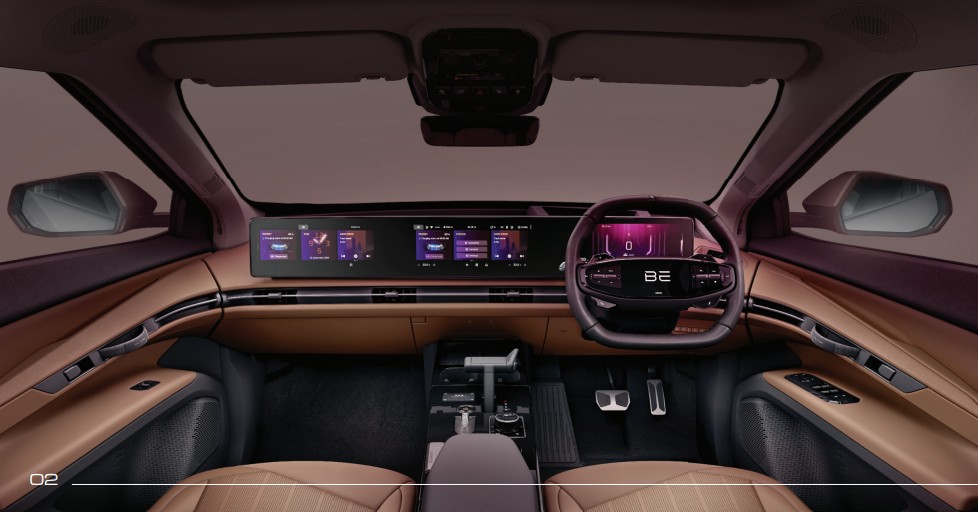
Performance: BE 6 SPORTEQ Is the Clear Winner
This is where the two SUVs are fundamentally different.
The BE 6 SPORTEQ uses a rear-wheel-drive setup and gets 380 Nm of torque. Depending on the battery, its motor produces up to 170 kW with the 59 kWh battery, 180 kW with the 70 kWh battery and 210 kW with the 79 kWh battery.
The Creta Electric is front-wheel drive. Its 42 kWh version produces 99 kW (135 PS), while the 51.4 kWh version produces 126 kW (171 PS), with 255 Nm of torque.
So, if you care about acceleration, overtaking performance and driving involvement, the BE 6 is in a different league.
The RWD layout also gives the Mahindra a more enthusiast-oriented character. Mahindra hasn’t simply made the SPORTEQ a cosmetic edition—the mechanical package remains strongly performance-focused. The three battery options are all offered with RWD.
Performance verdict: BE 6 SPORTEQ wins easily.
But that doesn’t mean the Creta is slow or inadequate. For normal city and highway driving, the 51.4 kWh version’s 171 PS is more than sufficient for most families.
The difference is that the BE 6 gives you considerably more headroom.
Range and Charging: Another Win for Mahindra
If range anxiety is one of your biggest concerns, the BE 6 SPORTEQ has the advantage.
Its claimed ranges are:
- 59 kWh — 548 km
- 70 kWh — 651 km
- 79 kWh — 683 km
The Creta Electric offers:
- 42 kWh — 420 km
- 51.4 kWh — 510 km
Of course, these are certified test-cycle figures. Real-world range will depend on speed, traffic, weather, air-conditioning use, driving style and other factors.
Charging is another major advantage for the Mahindra.
The BE 6 can charge from 20–80% in around 20 minutes with an appropriately rated DC charger. The Creta Electric takes around 39 minutes for 10–80% on a suitable DC fast charger according to Hyundai’s specifications.
For someone who frequently drives between cities, that difference can matter more than the headline range.
Range and charging verdict: BE 6 SPORTEQ.
BaaS Comparison: BE 6 vs Creta Electric
Now comes the most interesting part.
With BaaS, you don’t pay the entire battery cost upfront. Instead, the vehicle’s initial price comes down and you pay a usage-based battery charge.
Mahindra BE 6 SPORTEQ BaaS
The 59 kWh SPORTEQ One starts at:
₹11.45 lakh + ₹3.75/km
The SPORTEQ Two starts at:
₹12.95 lakh + ₹3.75/km
Mahindra confirms these BaaS prices for the 59 kWh One and Two variants.
Hyundai Creta Electric BaaS
The Creta Electric BaaS starts at:
₹10.99 lakh + ₹3.90/km
Hyundai itself explains that BaaS separates the battery cost from the vehicle invoice and converts it into a usage-based fee starting at ₹3.90 per kilometre.
At first glance, the Hyundai looks cheaper.
But let’s take an example.
At 1 lakh km
BE 6 SPORTEQ One:
₹11.45 lakh + ₹3.75 × 1,00,000
= ₹15.20 lakh
Creta Electric BaaS:
₹10.99 lakh + ₹3.90 × 1,00,000
= ₹14.89 lakh
So, based purely on these headline numbers, the Creta is around ₹31,000 cheaper after 1 lakh km.
However, this isn’t the complete ownership cost. Financing, insurance, charging, taxes and the specific BaaS agreement can affect the final amount.
And there’s an important point buyers should understand:
BaaS doesn’t make the battery free. It mainly changes when and how you pay for it.
For someone who wants a much lower initial outlay, however, that can be a significant advantage.
Which One Should You Buy?
Buy the Mahindra BE 6 SPORTEQ if…
You should choose the BE 6 if you want your EV to be more than just a practical commuter.
It makes more sense if you:
- Enjoy driving
- Want RWD
- Travel frequently on highways
- Want 600+ km claimed range
- Want faster charging
- Need stronger performance
- Want larger battery options
- Prefer a more futuristic EV experience
My pick: BE 6 SPORTEQ Three 70 kWh.
At ₹22.95 lakh, it looks like the sweet spot in the range. You get a 651 km claimed range without going all the way to the ₹25–27 lakh versions.
Buy the Hyundai Creta Electric if…
The Creta Electric makes more sense if you’re buying an EV primarily as a family car.
Choose it if you:
- Mostly drive in the city
- Want a lower starting price
- Prefer a familiar SUV experience
- Prioritise comfort and everyday usability
- Want Hyundai’s established service network
- Don’t need extreme performance
- Want to keep the initial purchase cost down with BaaS
For mostly urban use, the 42 kWh version should be adequate for many buyers.
If you regularly travel long distances, I’d spend more on the 51.4 kWh Long Range version.
BE 6 SPORTEQ vs Creta Electric: Final Verdict
The Hyundai Creta Electric is the sensible family choice, while the Mahindra BE 6 SPORTEQ is the more exciting and technically ambitious EV.
The Creta wins on entry price, familiarity and everyday practicality.
The BE 6 wins on:
Performance + range + charging speed + battery choices + driving dynamics.
And that’s why I wouldn’t call this a simple winner-takes-all comparison.
If your EV is mainly going to be a city family car, buy the Creta Electric.
If you want an EV that can also put a smile on your face every time you accelerate, buy the BE 6 SPORTEQ.
And if I had to pick one for myself, I’d go for the BE 6 SPORTEQ Three 70 kWh. It looks like the strongest balance of price, range and performance in the entire comparison.
Also Read : Mahindra BE 6 SPORTEQ vs TATA SIERRA EV Comparison : Price, Variants, Range and Which One Should You Buy?
FAQs
Is the Mahindra BE 6 SPORTEQ better than the Hyundai Creta Electric?
For performance, range and charging speed, the BE 6 SPORTEQ is clearly ahead. The Creta Electric is better suited to buyers prioritising practicality, comfort and a lower entry price.
Which has more range: BE 6 SPORTEQ or Creta Electric?
The BE 6 SPORTEQ has the higher claimed range. Its 79 kWh version claims up to 683 km, while the Creta Electric 51.4 kWh Long Range claims up to 510 km.
Which is cheaper under BaaS?
The Creta Electric starts at ₹10.99 lakh + ₹3.90/km, while the BE 6 SPORTEQ One starts at ₹11.45 lakh + ₹3.75/km.
Which BE 6 SPORTEQ variant is the best value?
The SPORTEQ Three 70 kWh is arguably the sweet spot. At ₹22.95 lakh, it offers a claimed 651 km range while costing significantly less than the 79 kWh versions.
Which car is better for highway driving?
The BE 6 SPORTEQ is the stronger highway choice because of its larger battery options, longer claimed range, higher performance and faster DC charging.
Which is better for city driving?
The Creta Electric can make more sense for predominantly city driving, especially in a 42 kWh configuration. You may not need the BE 6’s larger battery and significantly higher performance if most journeys are short.
Is BaaS actually cheaper?
Not necessarily. BaaS reduces the upfront purchase price, but you then pay a per-kilometre battery fee. Whether it works out cheaper over the entire ownership period depends on how much you drive and the terms of the particular BaaS agreement.
Which one would you buy?
For a family-focused buyer, I’d choose the Creta Electric 51.4 kWh LR. For someone who wants performance and long-distance capability, I’d choose the BE 6 SPORTEQ Three 70 kWh.
Related Posts:
- Mahindra BE6 Sporteq VS Vinfast VF6 Comparison And Price

- Mahindra BE 6 SPORTEQ vs MG Windsor EV Comparison :…
- Mahindra BE6 SPORTEQ Edition Price And…
- Mahindra BE 6 SPORTEQ vs TATA SIERRA EV Comparison :…
- Mahindra BE6 Sporteq VS Mahindra XEV 9E Comparison :…
- Mahindra BE 6 SPORTEQ vs Tata Harrier EV Comparison…
1 thought on “Mahindra BE 6 SPORTEQ vs Hyundai Creta Electric Comparison : Price, Variants, Performance & BaaS Compared”
Comments are closed.