
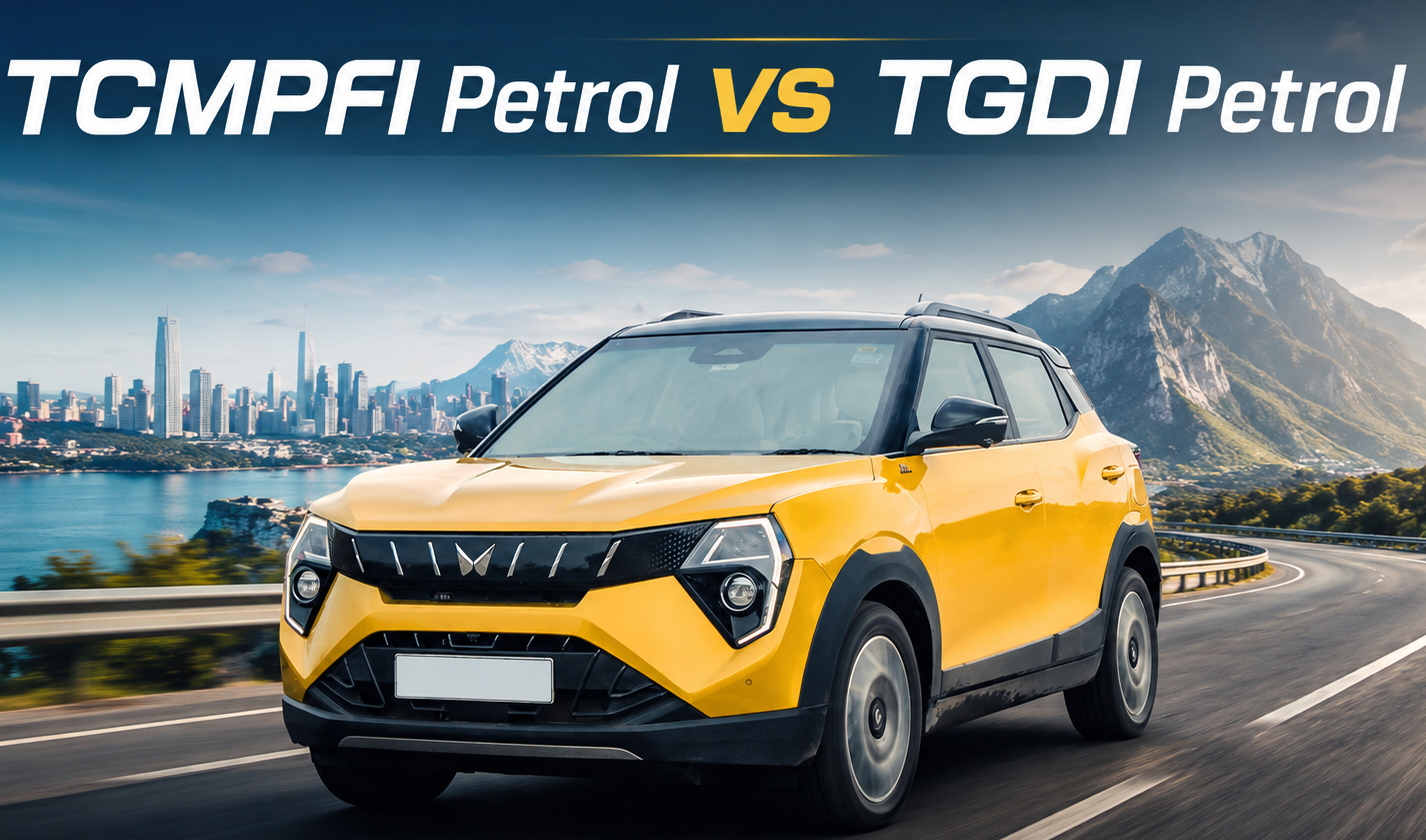
If you’re planning to buy the Mahindra XUV 3XO petrol, one question will almost certainly come up: Should you choose the TCMPFi engine or spend extra for the TGDi engine? This Mahindra XUV 3XO TCMPFi vs TGDi Engine Comparison explains the real-world differences between the two engines, so you can confidently choose the one that best suits your driving style and budget.
On paper, both are 1.2-litre, 3-cylinder turbocharged petrol engines. They even share the same transmission options (6-speed manual and 6-speed automatic). However, the technology underneath is quite different, and that difference affects everything—from power delivery and fuel efficiency to long-term maintenance and ownership costs.
In this guide, we’ll compare the Mahindra XUV 3XO TCMPFi vs TGDi in simple language so you can choose the engine that best matches your driving style.
Mahindra XUV 3XO TCMPFi vs TGDi Specifications
| Specification | TCMPFi | TGDi |
|---|---|---|
| Engine | 1.2L Turbo Petrol MPFI | 1.2L Turbo Petrol Direct Injection |
| Fuel Injection | Multipoint Fuel Injection | Gasoline Direct Injection |
| Turbocharger | Yes | Yes |
| Intercooler | Standard Turbo | High-pressure Turbo with Intercooler |
| Power | 82 kW (111 PS) @ 5000 rpm | 96 kW (130 PS) @ 5000 rpm |
| Torque | 200 Nm @ 1500-3500 rpm | 230 Nm @ 1500-3750 rpm |
| Transmission | 6 MT / 6 AT | 6 MT / 6 AT |
The TGDi produces around 19 PS more power and 30 Nm more torque, making it one of the most powerful petrol engines in the compact SUV segment.

Understanding the Technology Difference
This is where the two engines truly differ.
TCMPFi (Turbo Charged Multipoint Fuel Injection)
The TCMPFi engine uses Multipoint Fuel Injection (MPFI).
Instead of spraying fuel directly into the combustion chamber, fuel is injected into the intake ports, where it mixes with air before entering the cylinder.
Think of it like preparing ingredients outside the kitchen before cooking.
Advantages
- Simpler engineering
- Lower maintenance cost
- Proven technology
- Better long-term reliability
- Less sensitive to fuel quality
Because this technology has been around for years, mechanics are familiar with it and maintenance is generally straightforward.
TGDi (Turbo Gasoline Direct Injection)
The TGDi engine uses Direct Fuel Injection.
Here, fuel is sprayed directly inside the combustion chamber at very high pressure (up to 250 bar according to Mahindra), allowing much more precise control of combustion. It also features an intercooler, variable valve timing, an electronically controlled variable oil pump, and an integrated exhaust manifold.
Imagine watering the roots of a plant directly instead of pouring water around it. The delivery is more precise and efficient.
Advantages
- Better combustion
- Higher performance
- Improved throttle response
- Better torque across the rev range
- Slightly better efficiency under ideal conditions
The downside is increased complexity, which can translate into higher maintenance costs over the long term.

Design and Engineering Comparison
Although both engines belong to Mahindra’s mStallion family, the TGDi receives several advanced components that the TCMPFi does not.
TGDi Highlights
- High-pressure direct injection system
- Intercooler
- Intelligent Energy Management
- Variable Valve Timing (VVT)
- Electronically controlled variable oil pump
- Integrated exhaust manifold
These technologies allow the TGDi to generate more power without increasing engine capacity. However, every additional system also adds complexity.
The TCMPFi, by comparison, keeps things simpler. Fewer components generally mean fewer potential failure points over many years of ownership.
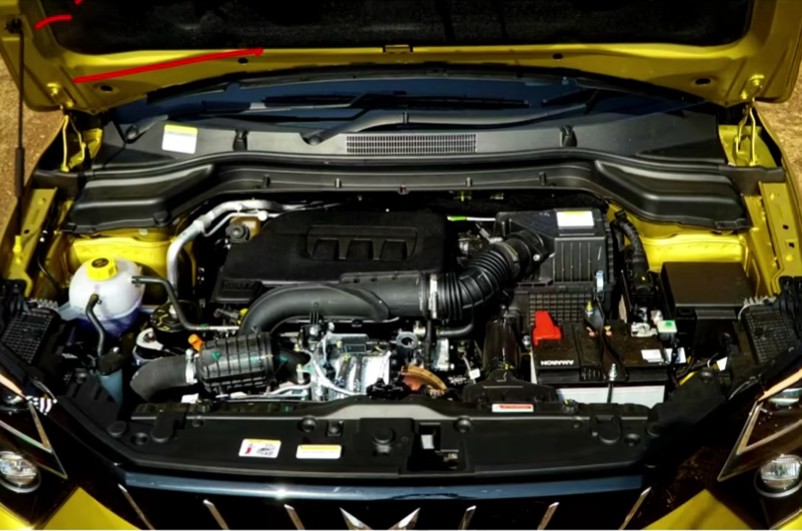
Performance Comparison
This is where you’ll notice the biggest difference.
TCMPFi Driving Experience
The TCMPFi feels smooth, predictable, and easy to drive.
For daily commuting, city traffic, school runs, and relaxed highway cruising, it has more than enough performance. The 200 Nm of torque arrives from just 1,500 rpm, so the engine rarely feels strained during normal driving.
If you’re upgrading from a naturally aspirated petrol car, the TCMPFi will already feel significantly quicker.
TGDi Driving Experience
The TGDi transforms the character of the XUV 3XO.
The additional 19 PS and 30 Nm are noticeable during:
- Highway overtakes
- Quick acceleration
- Steep hill climbs
- Fully loaded family trips
Mahindra also claims a 0–60 km/h time of 4.5 seconds for the TGDi manual, highlighting its strong low-end and mid-range performance.
If you enjoy spirited driving, the TGDi is clearly the more exciting option.
Winner: TGDi
Fuel Efficiency Comparison
Interestingly, the more powerful engine is also rated slightly higher for fuel efficiency.
| Engine | Manual | Automatic |
|---|---|---|
| TCMPFi | 18.89 km/l | 17.96 km/l |
| TGDi | 20.1 km/l | 18.2 km/l |
These are official figures under test conditions. Real-world mileage depends heavily on traffic, driving style, and road conditions, but direct injection can improve efficiency because fuel delivery is more precise. Owners on community forums often report that the advantage is modest in everyday driving.
Reliability Comparison
Many buyers planning to keep their SUV for 8–10 years ask this question first.
TCMPFi Reliability
The TCMPFi has a simpler fuel system and generally:
- has fewer high-pressure components,
- is less sensitive to fuel quality,
- is easier and often cheaper to service.
Its port injection also washes the intake valves with fuel, helping reduce carbon deposits.
TGDi Reliability
The TGDi is engineered for performance, but direct-injection engines across the industry can be more prone to carbon buildup on intake valves over very high mileages because fuel no longer passes over them. Regular maintenance and good-quality fuel help minimise this risk. This doesn’t mean the engine is unreliable—it simply requires closer attention to maintenance than a simpler MPFI setup. Community discussions frequently cite the TCMPFi as the safer choice for buyers prioritising long-term simplicity.
Winner for long-term simplicity: TCMPFi
Maintenance Cost Comparison
Over several years, maintenance can differ.
TCMPFi
- Simpler fuel system
- Lower repair complexity
- Potentially lower ownership cost
TGDi
- More advanced technology
- High-pressure fuel injection
- Additional electronic systems
- Potentially higher repair costs outside warranty
Routine servicing schedules remain similar, but out-of-warranty repairs can be more expensive because of the additional hardware.
Which Engine Should You Buy?
Buy the TCMPFi if:
- Most of your driving is in the city.
- You want lower maintenance costs.
- You plan to keep the car for many years.
- You prefer proven, simpler technology.
- Your priority is value for money.
Buy the TGDi if:
- You frequently drive on highways.
- You enjoy quick acceleration.
- You often travel with a full load of passengers and luggage.
- You want the strongest petrol performance available in the 3XO.
- You’re comfortable paying a little more for advanced technology.
Also Read : Maruti Brezza Facelift VS Skoda Kylaq Comparison : Which Compact SUV Offers Better Value?
Final Verdict
There isn’t a universally “better” engine—only a better engine for your needs.
The TCMPFi is the practical choice. It delivers strong turbocharged performance while keeping ownership simpler and potentially more economical over the long term.
The TGDi, on the other hand, showcases Mahindra’s latest petrol-engine technology. Its direct injection system, higher power output, and stronger mid-range make the XUV 3XO feel noticeably more energetic, especially on open roads.
If your priority is peace of mind and lower ownership costs, choose the TCMPFi.
If your priority is performance and driving enjoyment, the TGDi is well worth the extra investment.
Frequently Asked Questions (FAQs)
1. What is the difference between TCMPFi and TGDi in the Mahindra XUV 3XO?
The TCMPFi uses Multipoint Fuel Injection, while the TGDi uses Gasoline Direct Injection with a high-pressure fuel system. The TGDi produces more power and torque but is mechanically more complex.
2. Which engine is more powerful?
The TGDi produces 96 kW (130 PS) and 230 Nm, while the TCMPFi produces 82 kW (111 PS) and 200 Nm. The TGDi is noticeably quicker during acceleration.
3. Which engine is better for city driving?
For everyday city use, the TCMPFi is more than capable and may appeal to buyers looking for lower long-term ownership costs.
4. Which engine is better for highway driving?
The TGDi’s extra power and torque make overtaking and high-speed cruising easier, making it the stronger highway performer.
5. Is the TGDi engine less reliable?
Not necessarily. With proper maintenance, the TGDi can be very reliable. However, its more advanced direct-injection system is inherently more complex than the TCMPFi’s port-injection setup.
6. Which engine has lower maintenance costs?
The TCMPFi is generally expected to cost less to maintain over the long term because of its simpler design.
7. Does the TGDi deliver better fuel economy?
Official figures show a slight advantage for the TGDi, although real-world mileage differences are usually modest and depend on driving conditions.
8. Which Mahindra XUV 3XO petrol engine would we recommend?
For most buyers, the TCMPFi offers the best balance of performance, simplicity, and value. If you enjoy enthusiastic driving and want maximum performance from your compact SUV, the TGDi is the better choice.






2 thoughts on “Mahindra XUV 3XO TCMPFi vs TGDi Engine Comparison: Which One Should You Buy?”
Comments are closed.