

The Maruti Baleno Facelift vs Tata Altroz comparison and specifiactions has become much more interesting after the launch of the new Baleno. Maruti has not just refreshed the Baleno’s styling and features; it has also replaced the previous four-cylinder petrol engine with a new three-cylinder unit. At the same time, Tata Altroz has been steadily expanding its powertrain and feature combinations, particularly with its CNG version.
The new Baleno starts at ₹6,09,900 (ex-showroom) for the petrol-manual Sigma variant, but Maruti has not yet announced the complete variant-wise pricing.
So, while the Baleno gets some impressive new technology such as Level 2 ADAS, ventilated front seats and a new engine, the Altroz has a particularly strong advantage when you look at CNG versatility, safety and feature combinations.
Let’s see which one makes more sense.
Maruti Baleno Facelift vs Tata Altroz: Quick Comparison
| Specification | New Maruti Baleno | Tata Altroz |
|---|---|---|
| Petrol engine | 1.2L, 3-cylinder NA | 1.2L, 3-cylinder NA |
| CNG engine | 1.2L, 3-cylinder | 1.2L, 3-cylinder |
| Diesel | No | 1.5L, 4-cylinder |
| Petrol power | 83 PS | Around 88 PS |
| Petrol torque | 112.4 Nm | 115 Nm |
| CNG power | 69.75 PS* | Around 73.5 PS |
| CNG torque | 101.8 Nm* | Around 103 Nm |
| Petrol gearbox | 5MT / 5AMT | 5MT / 5AMT / 6DCA |
| CNG gearbox | 5MT | 5MT / 5AMT |
| CNG technology | Conventional factory CNG layout | Twin-cylinder CNG |
| Safety rating | 4-star Bharat NCAP | 5-star Bharat NCAP |
| Seating | 5 | 5 |

Baleno’s Biggest Change: 4-Cylinder to 3-Cylinder Engine
This is perhaps the most important mechanical change in the new Baleno.
The outgoing Baleno used Maruti’s 1.2-litre four-cylinder K12N petrol engine. The facelift replaces it with the 1.2-litre Z12E three-cylinder naturally aspirated petrol engine.
The new engine produces 83 PS and 112.4 Nm, compared with the outgoing engine’s 90 PS and 113 Nm. So, on paper, the new Baleno actually loses some peak power.
That immediately raises an obvious question:
Why would Maruti replace a four-cylinder engine with a three-cylinder engine?
The answer is efficiency.
The new engine uses technologies including Dual VVT and Idle Start-Stop, and Maruti claims fuel efficiency of 23.80 km/l with the 5-speed manual and 24.77 km/l with the AMT. The CNG version claims 33.61 km/kg.
This means Maruti has clearly prioritised fuel efficiency and emissions over outright power.
However, there is another side to the story.
A three-cylinder engine inherently has fewer firing events per engine cycle than a four-cylinder engine, so vibration and refinement become important engineering challenges. This doesn’t automatically mean the new Baleno will be unpleasant to drive—the real-world refinement depends heavily on engine mounting, balancing and calibration.
In fact, Maruti says the new engine has been tuned for improved low-end torque response.
So this is not simply a case of “three cylinders = bad.” It is more about whether Maruti’s engineering has managed to deliver the refinement expected from a premium hatchback.
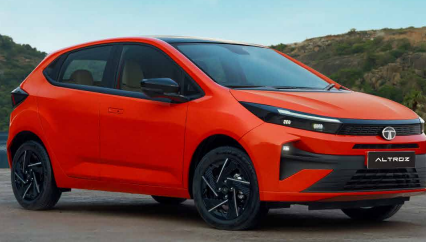
Tata Altroz Engine Options
The Altroz takes a different approach.
It continues with a 1.2-litre three-cylinder naturally aspirated petrol engine, but also offers a 1.5-litre four-cylinder diesel engine, giving buyers more choice.
The petrol engine produces around 88 PS and 115 Nm, while the diesel produces 90 PS and 200 Nm. The CNG version produces around 73.5 PS and 103 Nm.
The Altroz therefore has an important advantage for buyers who want diesel, especially for frequent highway driving.
Its petrol engine can also be paired with multiple transmissions, including 5-speed manual, 5-speed AMT and 6-speed DCA, while the CNG range now gets a 5-speed AMT as well. Tata introduced the CNG-AMT combination in May 2026.

Baleno vs Altroz CNG: This Is Where Things Get Interesting
This is arguably the most important part of this comparison.
The new Baleno CNG is available in two variants — Delta and Zeta — and with a 5-speed manual gearbox.
Its claimed efficiency is an impressive 33.61 km/kg.
But Tata has taken the CNG concept much further.
Tata Altroz CNG offers:

- Twin-cylinder CNG technology
- Better boot-space utilisation
- CNG + AMT combination
- CNG in higher variants
- CNG with sunroof variants
- Cruise control on relevant variants
- Multiple CNG trims
Tata introduced the CNG-AMT in 2026, with five variants ranging from Pure to Accomplished S.
The twin-cylinder arrangement is also an important advantage. Instead of using one large cylinder that eats into usable boot space, Tata uses two smaller cylinders positioned underneath the boot floor. The supplied specifications show 210 litres of boot space for the CNG Altroz versus 345 litres for the petrol version.
This is a clever engineering solution because CNG buyers traditionally have to sacrifice a significant amount of luggage space.

CNG + Sunroof: Another Altroz Advantage
This is where the feature comparison becomes particularly interesting.
Tata offers the Altroz CNG with higher variants that can be equipped with a sunroof. Tata’s current lineup also offers the CNG-AMT combination across multiple variants.
The new Baleno, meanwhile, keeps its CNG range limited to the Delta and Zeta trims, and the CNG is currently offered with the manual gearbox.
So if someone specifically wants:
CNG + automatic + sunroof + higher-end features
the Altroz is currently the more flexible choice.
Features: Baleno Fights Back Hard

The Baleno isn’t behind everywhere.
In fact, when it comes to technology and driver assistance, the new Maruti has some impressive equipment.
The Baleno facelift gets:
- Level 2 ADAS
- Adaptive Cruise Control
- Lane Keep Assist
- Lane Departure Warning
- Advanced Emergency Braking
- Forward Collision Warning
- 360-degree camera
- Head-Up Display
- TPMS
- Wireless charger
- 9-inch touchscreen
- Ventilated front seats
- Clarion premium audio system
- Six airbags
Maruti describes Level 2 ADAS with a radar-and-camera setup as one of the major highlights of the new Baleno.
The ventilated front seats are also a notable addition and are positioned as a segment-first feature for the Baleno’s class.
So, while Altroz wins some interesting battles, Baleno has its own strong technology package.
Safety: Altroz Has the Clearer Advantage

This is one area where Tata currently has a very strong argument.
The all-new Tata Altroz has a 5-star Bharat NCAP rating, with 29.65/32 for adult occupant protection and 44.9/49 for child occupant protection. Importantly, Tata says the rating applies across its petrol, diesel and CNG powertrains.
The Baleno facelift, meanwhile, has been reported with a 4-star Bharat NCAP rating.
That makes the comparison particularly interesting:
Baleno: more advanced driver assistance technology.
Altroz: stronger crash-test rating.
These aren’t exactly the same thing. ADAS can help avoid or mitigate certain accidents, while a crash-test rating evaluates occupant protection in defined crash scenarios.
For a family buyer, therefore, Altroz’s 5-star rating is a major selling point.
Dimensions and Practicality
The supplied specifications show the Baleno at:
- Length: 3,990 mm
- Width: 1,745 mm
- Height: 1,530 mm
- Wheelbase: 2,520 mm
- Boot space: 318 litres
- Turning radius: 4.85 m
The Altroz is slightly wider and has a slightly longer wheelbase:
- Length: 3,990 mm
- Width: 1,755 mm
- Height: 1,523 mm
- Wheelbase: 2,501 mm
- Ground clearance: 165 mm
- Petrol boot: 345 litres
- CNG boot: 210 litres
So the Altroz offers a larger standard boot, while the Baleno has a longer wheelbase.
Maruti Baleno Facelift vs Tata Altroz: Which One Should You Buy?
This comparison is much closer than it initially appears.
The new Baleno is particularly attractive if you want:
- Excellent claimed fuel efficiency
- A premium hatchback with Maruti’s ownership ecosystem
- Advanced ADAS
- Ventilated seats
- 360-degree camera
- Petrol AMT
- A compact and relatively light package
But the Altroz becomes extremely compelling if your priorities are broader.
It offers:
- 5-star Bharat NCAP rating
- Petrol, diesel and CNG options
- CNG + AMT
- Twin-cylinder CNG technology
- CNG with higher-end features
- Sunroof availability with CNG variants
- Cruise control in its feature mix
- More transmission and powertrain combinations
And this is where the CNG buyer should look particularly carefully.
The Baleno’s CNG efficiency figure is impressive, but Tata’s approach gives the Altroz CNG buyer considerably more flexibility. You can choose the fuel type and still get features and transmission options that were traditionally unavailable with factory-fitted CNG cars.
Also Read : Maruti Baleno Facelift 2026 Features Price and Specifications
Final Verdict
For efficiency, technology and Maruti’s new premium feature package, the Baleno is very attractive.
For safety, CNG versatility, powertrain choice and feature combinations, the Altroz currently has the stronger overall package.
The biggest question for the Baleno is now its variant-wise pricing. The ₹6,09,900 starting price is attractive, but until Maruti reveals the prices of the Delta, Zeta, Alpha and Alpha (O), it is difficult to judge whether the Baleno will truly undercut the Altroz on a like-for-like feature basis. Maruti has confirmed that the detailed variant-wise prices are still to be announced.
And that final price list could change the winner of this comparison completely.