
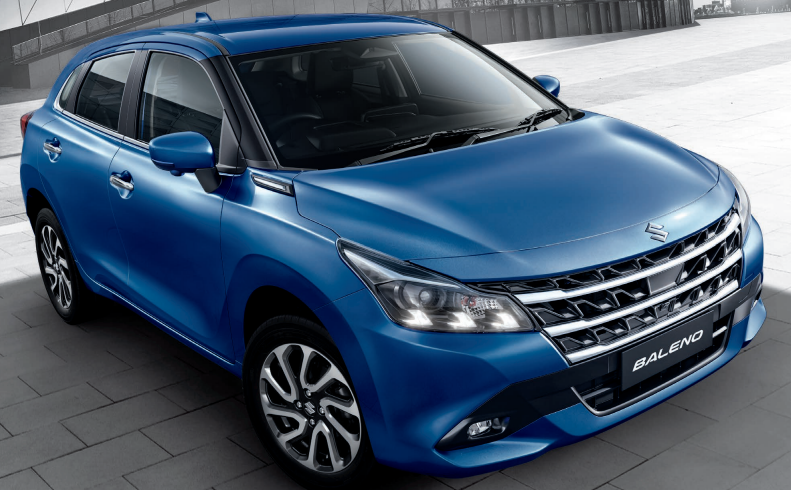
The Maruti Baleno Facelift 2026 Features Price and Specifications have created plenty of interest, especially with the introduction of a new 1.2-litre 3-cylinder petrol engine replacing the earlier 4-cylinder unit. The Maruti Baleno facelift 2026 has arrived, and this time the changes are more than just a new face. Maruti has refreshed the popular premium hatchback with new technology, additional safety features, ventilated seats and, most importantly, the new engine.
New Baleno starts at ₹6,09,900 (ex-showroom) for the Sigma petrol-manual variant. However, Maruti has not yet officially announced the complete variant-wise price list, so prices of Delta, Zeta, Alpha and the new Alpha (O) variant are still awaited.
And there is one change that deserves special attention: the Baleno has gone from four cylinders to three. Is that a downgrade or a smarter move for efficiency? Let’s understand.
Maruti Baleno Facelift 2026: Price
For now, only the starting price has been officially revealed:
| Variant | Fuel | Transmission | Price |
|---|---|---|---|
| Sigma | Petrol | 5-speed MT | ₹6,09,900 |
| Delta | Petrol/CNG | MT/AMT | To be announced |
| Zeta | Petrol/CNG | MT/AMT | To be announced |
| Alpha | Petrol | MT/AMT | To be announced |
| Alpha (O) | Petrol | MT/AMT | To be announced |
The new Alpha (O) is particularly interesting because it sits above Alpha and brings the Level 2 ADAS package.
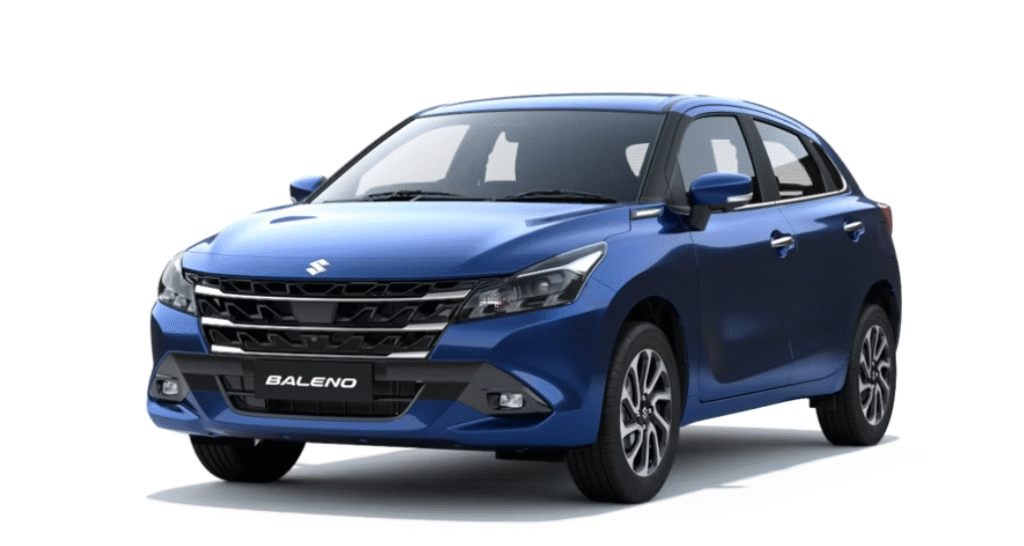
Maruti Baleno Facelift 2026 Engine: The Big 4-Cylinder to 3-Cylinder Change
This is arguably the biggest mechanical change in the new Baleno.
The facelift gets a 1.2-litre Z12E naturally aspirated petrol engine with three cylinders, producing 61kW or 82.93 PS at 5,700 rpm and 112.4 Nm at 4,500 rpm. The engine can be paired with either a 5-speed manual or 5-speed AMT.
The previous Baleno’s 1.2-litre petrol engine used four cylinders. Moving to three cylinders might initially sound like Maruti has simply cut one cylinder to save money, but the story is a little more complicated.
A three-cylinder engine generally has fewer moving parts and lower internal friction, which can help improve efficiency and reduce weight. That appears to be an important reason behind this change.
The new Baleno’s claimed efficiency is:
- 23.80 km/l – Petrol MT
- 24.77 km/l – Petrol AMT
- 33.61 km/kg – CNG MT
The technical specification sheet also confirms the 1,197cc displacement, 3-cylinder layout and idle start-stop system.
But what about refinement?
This is where the three-cylinder engine could feel different from the older four-cylinder unit.
A four-cylinder naturally has better primary balance, while a three-cylinder engine can produce more noticeable vibrations and a different exhaust note. Modern engine design can control much of this, but buyers moving from an older Baleno should not expect the exact same refinement character.
On the other hand, the new engine’s focus seems to be efficiency rather than outright performance.
So, is three cylinders a downgrade?
Not necessarily. On paper, Maruti has traded some cylinder count for improved efficiency and a newer powertrain. Whether buyers consider it an improvement will ultimately depend on how the engine feels in everyday driving.
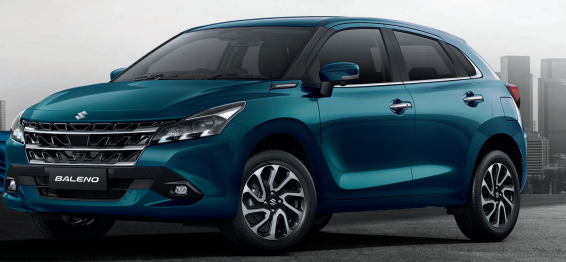
Baleno CNG Gets the Same 3-Cylinder Engine
The new Baleno continues with a factory-fitted CNG option.
In CNG mode, the 1.2-litre engine produces 51.3kW (69.75 PS) at 5,700 rpm and 101.8 Nm at 2,900 rpm. It is paired with a 5-speed manual transmission and claims 33.61 km/kg.
Interestingly, the CNG versions have a 55-litre water-equivalent CNG tank, while the petrol version gets a 37-litre fuel tank.
The Delta and Zeta are shown with the CNG powertrain, while the higher Alpha and Alpha (O) variants are petrol-only according to the current variant information.
Baleno Facelift 2026 Features: What Has Changed?
This is where the facelift becomes much more interesting.
The exterior changes are relatively evolutionary, but the equipment upgrade is significant.
Level 2 ADAS
The biggest talking point is the addition of Level 2 ADAS on the top-end Alpha (O) variant.
The system brings functions such as:
- Adaptive Cruise Control
- Lane Keep Assist
- Lane Departure Warning
- Forward Collision Warning
- Advanced Emergency Braking
This is a major step up for the Baleno because these systems can provide additional assistance during highway driving. Maruti itself describes its Level 2 ADAS as a driver-assistance suite designed to improve awareness and control.
Ventilated Front Seats
Another standout addition is front ventilated seats.
This is one of those features that sounds like a luxury gimmick until you live with it in India’s summer. Instead of simply making the cabin look more premium, ventilated seats can actually make long drives more comfortable.
The feature is available on the higher variants.
Wireless Charging
Wireless charging is also available on the higher variants, while the Zeta and above versions bring the more premium SmartPlay Pro+ infotainment setup.
360-Degree Camera and Head-Up Display
The higher-spec versions also bring features such as a 360-degree camera and Head-Up Display, continuing the technology-focused approach that has become an important part of the Baleno’s identity.
Variant-Wise Features
Sigma
The Sigma is the entry point into the new Baleno range.
Its highlighted equipment includes:
- 6 airbags
- Halogen projector headlamps
- Reverse parking sensors
- 15-inch wheels
- Basic safety and convenience equipment
The specification sheet confirms that Sigma uses 185/65 R15 tyres, while higher variants get wider 195/55 R16 alloy-wheel setups.
Delta
Delta adds several features that make the Baleno more convenient for daily use:
- Steering-mounted audio controls
- Electrically adjustable and foldable ORVMs
- 6 airbags
- TPMS
- Rear AC vents
- Touchscreen infotainment
- Wireless Android Auto and Apple CarPlay
The Delta CNG also gets the 33.61 km/kg claimed efficiency.
Zeta
The Zeta is where the Baleno starts feeling substantially more premium.
It gets features such as:
- TPMS
- Wireless charger
- SmartPlay Pro+ infotainment
- Rear-view camera
- Automatic climate control
- Push-button start/stop
- 16-inch alloy wheels
- LED projector headlights
The variant’s 16-inch wheels are also reflected in the technical specification sheet.
Alpha
Alpha takes the equipment list further with premium features including:
- Ventilated front seats
- Wireless charger
- Head-Up Display
- 360-degree camera
- Cruise control
- Auto-dimming IRVM
- Leather-wrapped steering wheel
- Semi-leatherette upholstery
This is the point where the Baleno starts moving beyond being simply a practical premium hatchback.
Alpha (O)
The new Alpha (O) is the range-topping variant.
Its biggest addition is Level 2 ADAS, making it the variant to look at if advanced driver assistance is a priority.
Maruti Baleno Facelift 2026 Specifications
| Specification | Petrol | CNG |
|---|---|---|
| Engine | 1.2L Z12E | 1.2L Z12E |
| Engine capacity | 1197cc | 1197cc |
| Cylinders | 3 | 3 |
| Power | 82.93 PS | 69.75 PS |
| Torque | 112.4 Nm | 101.8 Nm |
| Transmission | 5MT / 5AMT | 5MT |
| Claimed efficiency | 23.80/24.77 km/l | 33.61 km/kg |
| Length | 3990 mm | 3990 mm |
| Width | 1745 mm | 1745 mm |
| Height | 1530 mm | 1530 mm |
| Wheelbase | 2520 mm | 2520 mm |
| Boot space | 318 litres | — |
| Seating capacity | 5 | 5 |
| Turning radius | 4.85 m | 4.85 m |
The dimensions and core mechanical specifications come from the technical specification sheet you shared.
Also Read : Tata Curvv Series X Variants Wise Features Explained
Is the 2026 Baleno Facelift a Major Upgrade?
No Due to its engine Downgrade—but mostly underneath the equipment list rather than through a radical design change.
The exterior remains recognisably Baleno, but the facelift’s important changes are the new three-cylinder Z12E engine, better claimed fuel efficiency, Level 2 ADAS, ventilated seats, wireless charging and additional technology.
The three-cylinder engine will probably be the biggest talking point among existing Baleno owners. Some buyers may miss the smoother character of the old four-cylinder engine, but the new engine’s efficiency figures are certainly impressive on paper.
And then there is the ₹6,09,900 starting price.
For now, that is the number to watch because the real value equation will only become clear once Maruti announces the prices of Delta, Zeta, Alpha and Alpha (O).
Our Take
If Maruti manages to keep the mid-spec Delta and Zeta variants competitively priced, they could become the sweet spot of the range. The top Alpha (O), meanwhile, is aimed at buyers who want the full technology package, especially Level 2 ADAS.
But there is still one question hanging over the facelift:
Has Maruti made the Baleno better—or simply more feature-loaded?
The answer will become much clearer once the complete prices are announced. And that’s when the real Baleno vs Tata Altroz vs Hyundai i20 battle begins.





1 thought on “Maruti Baleno Facelift 2026 Features Price and Specifications”
Comments are closed.