
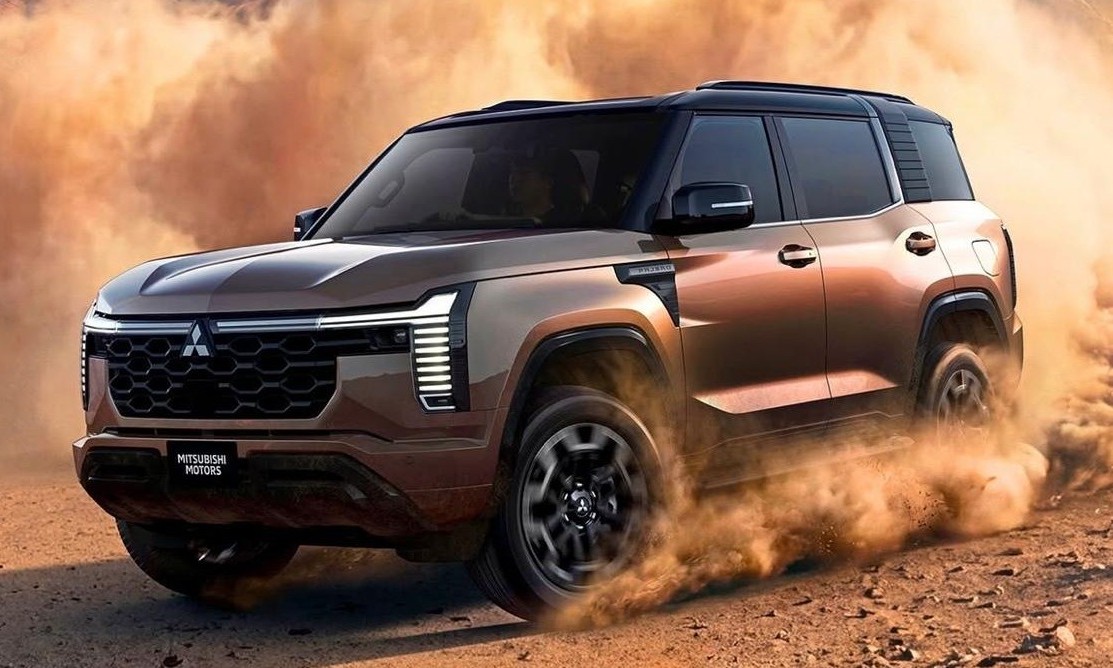
The 5th Generation Mitsubishi Pajero 2026 Launched Globally, bringing back the iconic SUV with a completely new design, modern technology and serious off-road hardware. Marking the return of one of Mitsubishi’s most iconic SUV nameplates after a five-year gap. The new Pajero has been unveiled as the brand’s new flagship cross-country SUV, combining traditional ladder-frame construction and serious 4WD hardware with a much more premium and technology-rich cabin.
Mitsubishi has retained the Pajero’s core identity—off-road capability, durability and confidence on difficult terrain—but has added a new layer of refinement and comfort to make the SUV more suitable for everyday driving as well.
5th Gen Mitsubishi Pajero 2026: Global Launch Details
Mitsubishi unveiled the all-new Pajero at a world premiere in Tokyo on September 2, 2026. The SUV will be built in Thailand and will first go on sale in the Thai market, followed by Japan and Australia during Mitsubishi’s fiscal 2026. From fiscal 2027, Mitsubishi plans to introduce the new Pajero in around 100 countries, including markets across ASEAN, Latin America and the Middle East.
The return is significant because the previous fourth-generation Pajero was discontinued in 2021. Mitsubishi says more than 3.29 million Pajeros across four generations had been produced since the nameplate was introduced in 1982.
So, this isn’t simply another new SUV for Mitsubishi. The company is positioning the fifth-generation Pajero as a flagship model that represents the next phase of the brand.
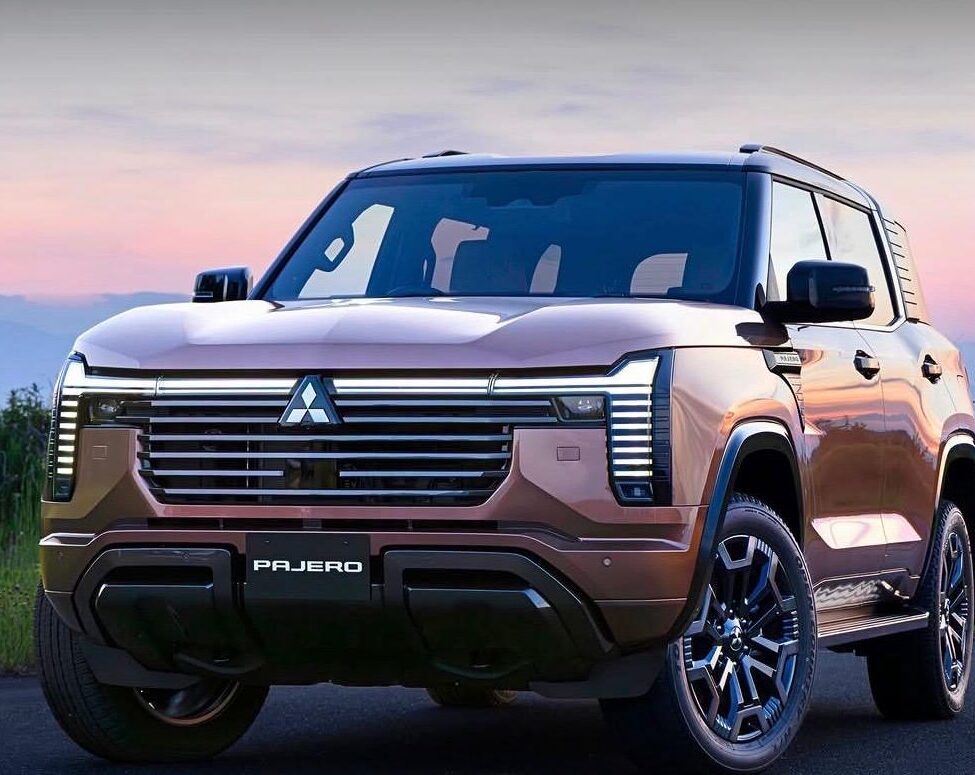
2.4-Litre Diesel Engine With 480 Nm Torque
The new Pajero stays true to its traditional formula by using a 2.4-litre clean-diesel engine with a single variable-geometry turbocharger.
The engine develops up to 480 Nm of maximum torque, with strong torque delivery designed to provide useful pulling power from low speeds through highway driving. The engine is paired with a newly developed 8-speed automatic transmission with Sport mode.
Some specifications are reported with 470 Nm of torque, indicating that outputs may vary depending on the particular specification or market.
What makes this interesting?
Mitsubishi hasn’t tried to turn the Pajero into a soft crossover.
The combination of a diesel engine, ladder-frame chassis, low-range 4WD and substantial ground clearance shows that off-road ability remains central to the Pajero’s identity.
Super Select 4WD-II and S-AWC
One of the biggest highlights of the fifth-generation Pajero is its advanced four-wheel-drive hardware.
The SUV gets Mitsubishi’s Super Select 4WD-II system, offering four selectable modes:
- 2H – rear-wheel drive
- 4H – full-time four-wheel drive
- 4HLc – locked centre differential
- 4LLc – locked centre differential with low-range gearing
The system is complemented by Super-All Wheel Control (S-AWC), which integrates systems including Active Yaw Control, Active Stability and Traction Control and ABS to improve stability and traction.
There are also seven selectable drive modes: Normal, Eco, Gravel, Snow, Mud, Sand and Rock.
In simple words?
The new Pajero isn’t relying only on electronics to look like an off-roader. It combines electronic control systems with proper mechanical 4WD hardware and low-range gearing, making it considerably more serious when the road disappears.
Dimensions, Ground Clearance and Off-Road Capability
The fifth-generation Pajero measures:
| Specification | Mitsubishi Pajero 2026 |
|---|---|
| Length | 4,920 mm |
| Width | 1,925 mm |
| Height | 1,910 mm |
| Wheelbase | 2,870 mm |
| Ground clearance | 230 mm |
| Seating | 7 seats |
| Approach angle | 30.4° |
| Ramp breakover angle | 22.6° |
| Departure angle | 25.8° |
The 230 mm ground clearance and strong approach and departure angles should make the Pajero capable of tackling rocks, ruts, steep inclines and uneven trails with considerably less concern about scraping the underbody.
Ladder-Frame Chassis and New Suspension
The Pajero continues with a high-rigidity ladder-frame chassis, reinforcing its traditional SUV credentials.
Mitsubishi has also developed a suspension setup featuring a high-mounted double-wishbone front suspension and a five-link rear configuration. The company says the suspension has been tuned to maintain tyre contact with the surface while improving ride comfort and on-road handling.
This could be one of the most important changes to the new Pajero because the SUV is expected to spend considerably more time on paved roads than its predecessors did.
More Premium Seven-Seater Cabin
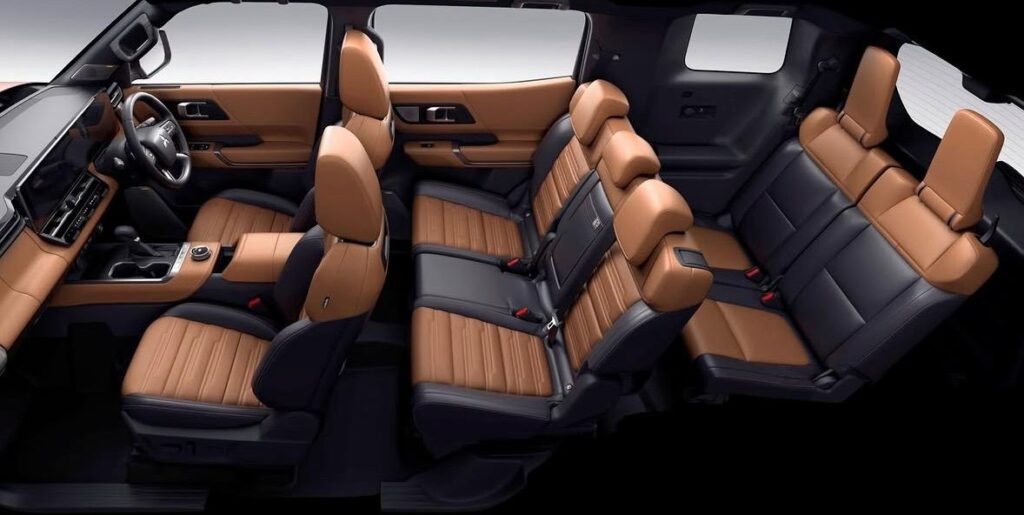
The new Pajero gets a three-row, seven-seat layout, making it suitable for larger families.
The cabin represents a major technological jump over the previous-generation SUV. Select specifications get large 14.3-inch displays, while the interior also features connected-car technology through Mitsubishi CONNECT.
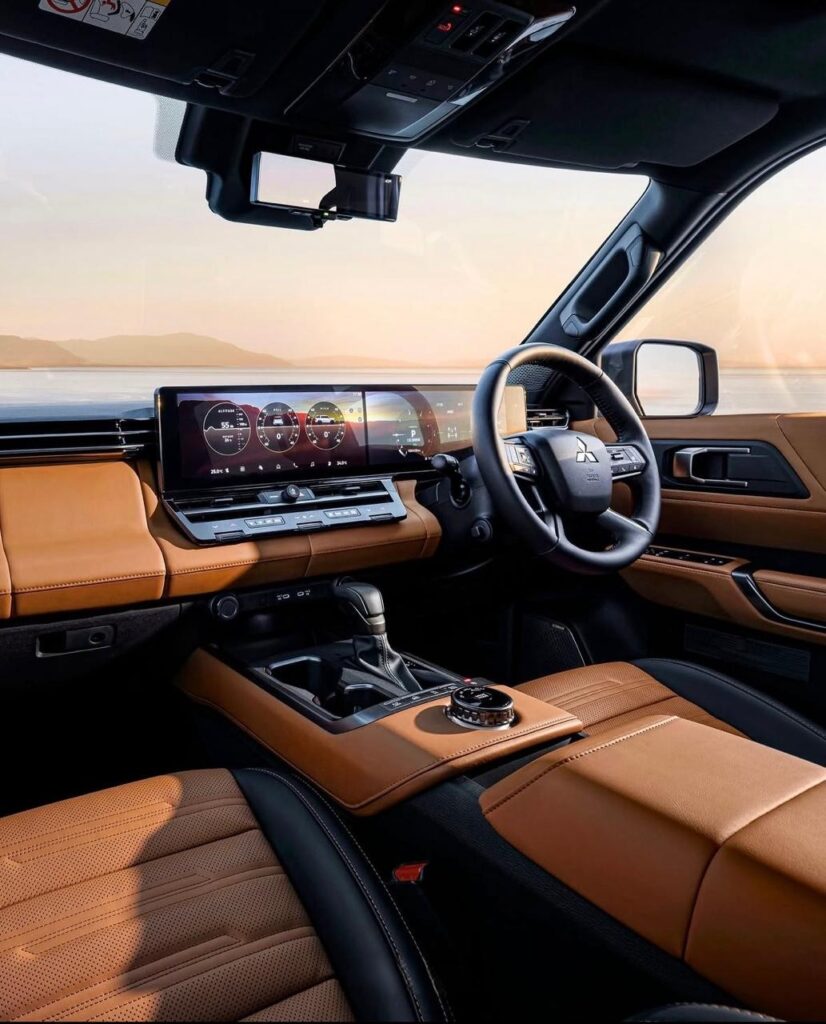
Other notable equipment includes:
- 3D Multi Around Monitor with front under-floor view
- MI-PILOT highway driving assistance
- Up to eight airbags, including an SRS centre airbag
- Wireless smartphone connectivity
- Mitsubishi CONNECT connected-car technology
- Dynamic Sound Yamaha Ultimate audio system
- 12 speakers and dual amplifiers
The Yamaha system is particularly interesting for a vehicle that is still built around rugged off-road capability, showing how Mitsubishi is trying to make the new Pajero feel more like a premium flagship SUV.
Also Read : MG Hector Tomahawk EV Specifications And Price In India
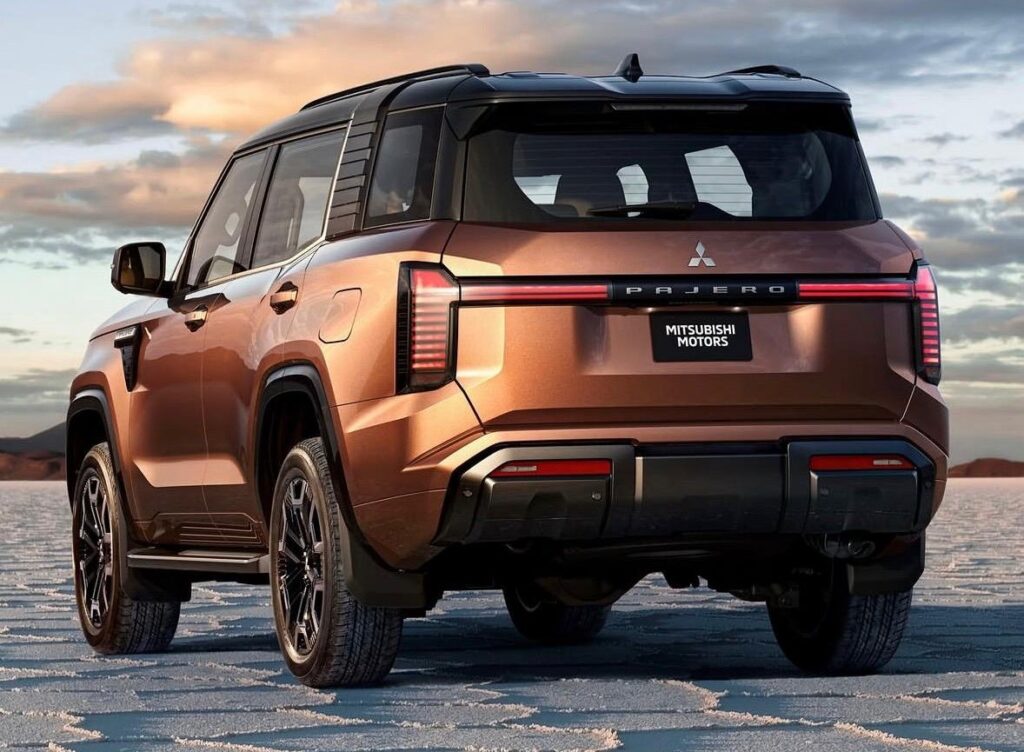
5th Gen Pajero: The Old Legend With a New Personality
The biggest story about the 2026 Mitsubishi Pajero isn’t simply that the nameplate has returned. It is how Mitsubishi has chosen to bring it back.
The company has retained the things that made the Pajero famous—diesel power, ladder-frame construction, low-range 4WD and serious off-road hardware—while adding premium comfort, modern displays, advanced driving assistance and connected technology.
In other words, Mitsubishi hasn’t abandoned the Pajero’s personality in pursuit of luxury.
It has tried to combine the rugged Pajero of the past with the expectations of a modern flagship SUV.
With its global rollout planned in phases, the fifth-generation Pajero could become one of the most interesting body-on-frame SUVs of this new generation. For enthusiasts who thought the Pajero’s story ended in 2021, September 2, 2026, marks the beginning of a very different second chapter.