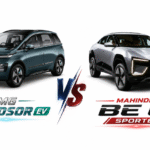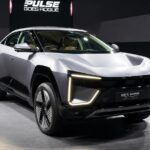
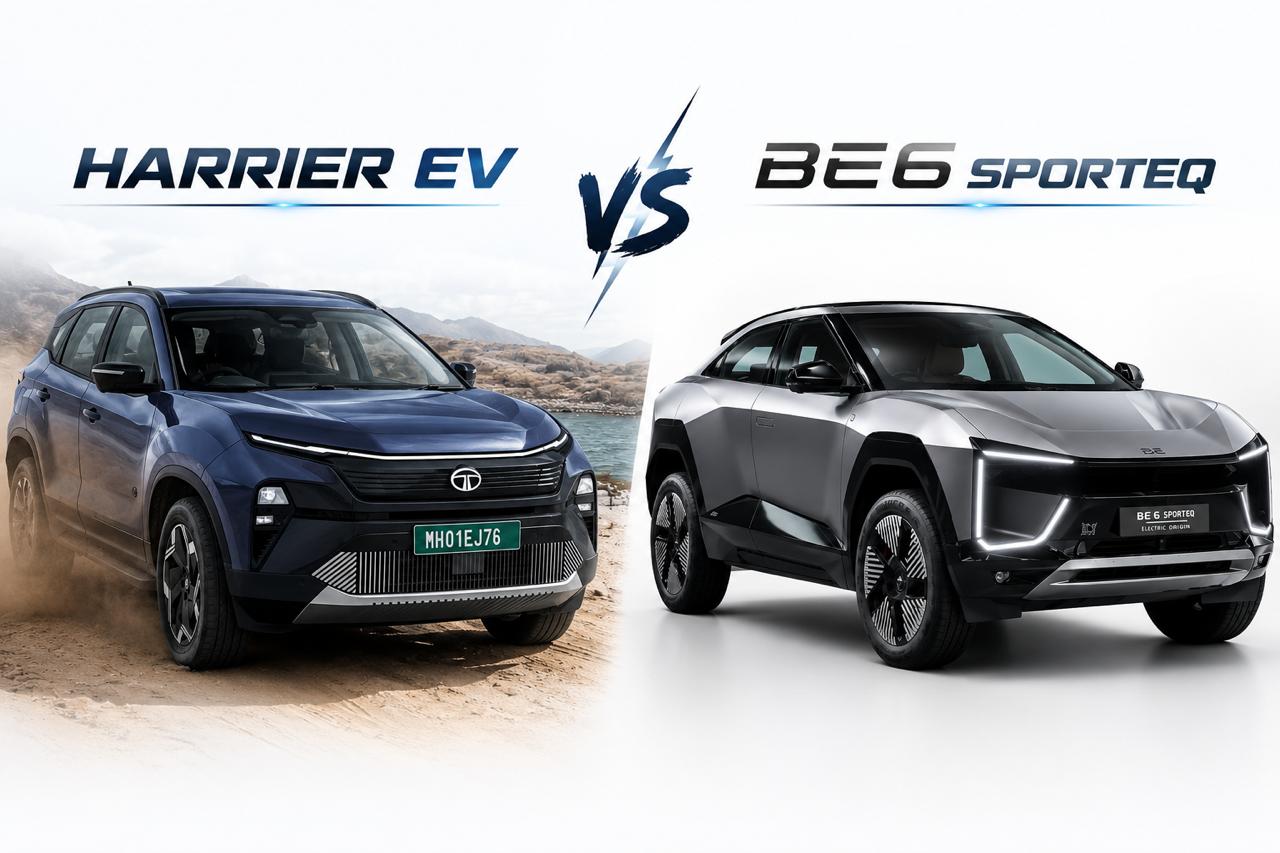
The Mahindra BE 6 SPORTEQ vs Tata Harrier EV Comparison is an interesting battle between two new-generation electric SUVs. Mahindra has launched the new BE 6 SPORTEQ on August 15, 2026, bringing a revised variant lineup, a new 70kWh battery option and a starting price of ₹19.45 lakh for outright purchase. The BaaS version starts at ₹11.45 lakh, although buyers also have to pay ₹3.75 per km for the battery. Deliveries are scheduled to begin on August 26.
And then there is the Tata Harrier EV, which takes a very different approach. It is larger, more traditional as an SUV, and is available with both rear-wheel drive and Tata’s dual-motor QWD setup.
So, if you have around ₹20–30 lakh to spend on an electric SUV, which one makes more sense: the new Mahindra BE 6 SPORTEQ or Tata Harrier EV?
Let’s compare them on the things that actually matter—price, variants, battery, power, performance, range and everyday usability.
Mahindra BE 6 SPORTEQ vs Tata Harrier EV: Quick Comparison
| Specification | Mahindra BE 6 SPORTEQ | Tata Harrier EV |
|---|---|---|
| Battery options | 59, 70, 79 kWh | 65, 75 kWh |
| Drive | RWD | RWD / AWD (QWD) |
| Maximum power | 210 kW (79 kWh) | 292 kW (AWD) |
| Maximum torque | 380 Nm | 504 Nm (AWD) |
| Claimed range | Up to 683 km | Up to 627 km RWD |
| AWD | No | Yes |
| Starting price | ₹19.45 lakh | ₹21.69 lakh |
| Top price | ₹26.95 lakh | Around ₹30.43 lakh |
| Character | Sporty, technology-focused | Larger, comfortable, adventure-focused |
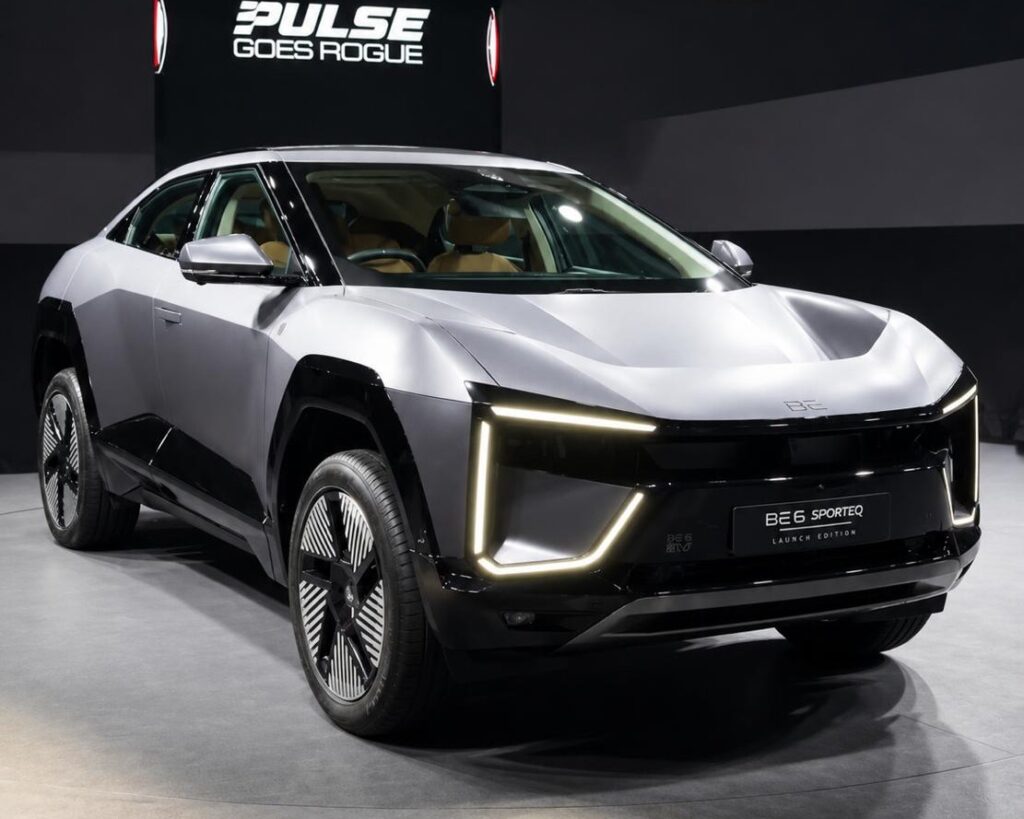
Mahindra BE 6 SPORTEQ: What’s New?
The BE 6 SPORTEQ isn’t an entirely new electric SUV underneath. Instead, Mahindra has reworked the BE 6 lineup and added new battery and technology choices.
The biggest mechanical change is the new 70kWh battery pack. The SPORTEQ range now offers 59kWh, 70kWh and 79kWh battery options. Mahindra has also introduced its Battery-as-a-Service model on the entry 59kWh variants, bringing the initial purchase price down substantially.
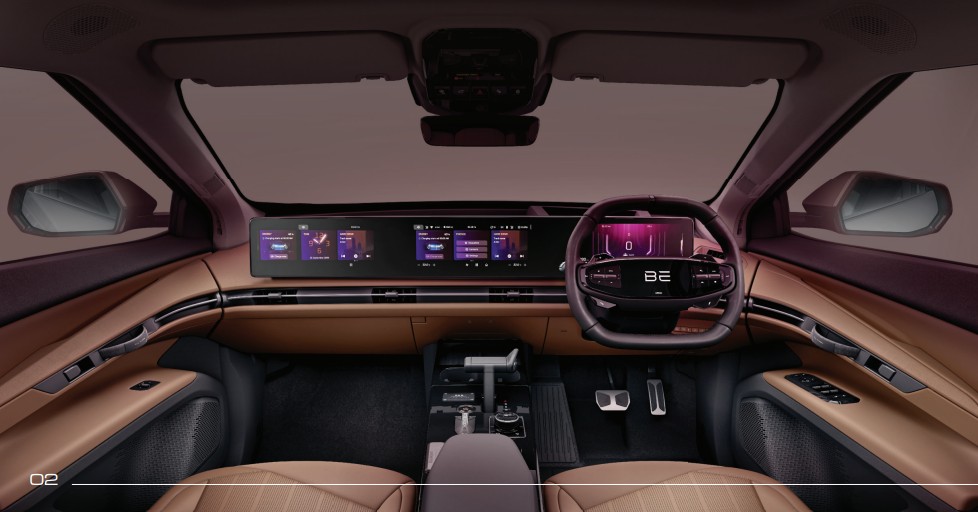
The other major change is inside the cabin. Higher SPORTEQ variants get a new three-screen cockpit, while Mahindra has also introduced new software and connected features under its TEQ suite.
But the interesting part for enthusiasts is that the BE 6 remains a rear-wheel-drive electric SUV with up to 210kW of motor power.
BE 6 SPORTEQ Variants and Prices
According to the current launch price list, the SPORTEQ range is structured like this:
| Variant | Battery | Ex-showroom price |
|---|---|---|
| SPORTEQ One | 59 kWh | ₹19.45 lakh |
| SPORTEQ Two | 59 kWh | ₹20.95 lakh |
| SPORTEQ Three | 59 kWh | ₹21.95 lakh |
| SPORTEQ Three | 70 kWh | ₹22.95 lakh |
| SPORTEQ Three Plus | 70 kWh | ₹23.95 lakh |
| SPORTEQ Three Plus | 79 kWh | ₹24.95 lakh |
| SPORTEQ Four / Launch Edition | 79 kWh | ₹26.95 lakh |
The entry One and Two variants can also be bought under BaaS. Their upfront prices are ₹11.45 lakh and ₹12.95 lakh respectively, with a battery charge of ₹3.75/km.
That makes the ₹22.95 lakh SPORTEQ Three with the 70kWh battery particularly interesting. It sits in a sweet spot between the cheaper 59kWh models and the ₹24.95 lakh 79kWh version.
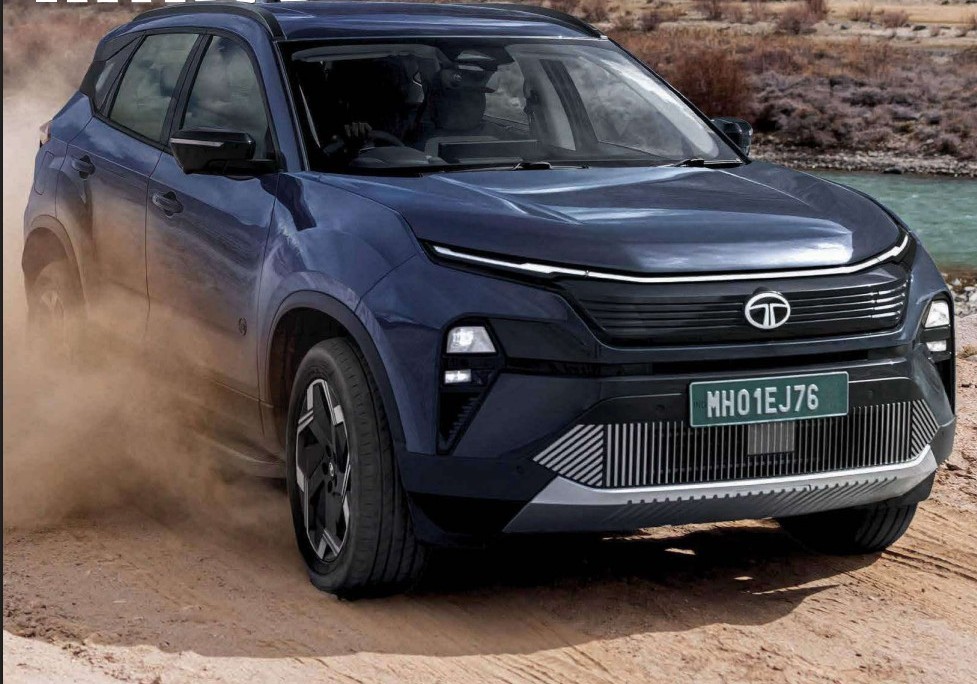
Tata Harrier EV Variants and Prices
Tata takes a much broader approach with the Harrier EV.
The current lineup includes Adventure, Adventure S, Fearless+, Empowered and AWD versions, with both 65kWh and 75kWh battery choices depending on the variant. Tata’s official specification page lists multiple configurations, including AC fast-charging variants.
Some important prices are:
| Variant | Battery | Ex-showroom price |
|---|---|---|
| Adventure 65 | 65 kWh | ₹21.69 lakh |
| Adventure S 65 | 65 kWh | ₹22.19 lakh |
| Fearless+ 65 | 65 kWh | ₹24.19 lakh |
| Fearless+ 75 | 75 kWh | ₹25.19 lakh |
| Fearless+ AWD 75 | 75 kWh | ₹26.69 lakh |
| Empowered 75 | 75 kWh | ₹27.69 lakh |
| Empowered AWD 75 | 75 kWh | ₹29.19 lakh |
| Empowered AWD 75 ACFC | 75 kWh | ₹29.68 lakh |
There are also ACFC and Stealth versions that push the top-end price beyond ₹30 lakh.
So on price, Mahindra has the advantage at the entry and mid levels, while Tata gives buyers more choices as they move towards luxury and AWD territory.
Power and Performance: BE 6 vs Harrier EV
This is where the comparison gets particularly interesting.
The BE 6 SPORTEQ gets three power outputs depending on the battery.
The 59kWh version produces 170kW, or roughly 228hp, while the 70kWh version gets around 180kW. The 79kWh version produces 210kW, approximately 282hp.
All versions produce 380Nm of torque, and the BE 6 remains rear-wheel drive. Mahindra’s earlier official specifications list 210kW and 380Nm for the 79kWh version, with a claimed 0–100km/h time of 6.7 seconds.
The Harrier EV is different.
Its standard RWD versions use a single rear motor producing around 238PS, while the dual-motor QWD versions add a front motor. The AWD setup produces 158PS at the front and 238PS at the rear, for a combined 504Nm of torque. Tata claims a 0–100km/h time of just 6.3 seconds for the dual-motor version.
The performance winner?
Harrier EV AWD.
If outright acceleration and traction are your priorities, Tata’s dual-motor version is the stronger machine.
But there is an important catch.
The BE 6’s 79kWh RWD version is significantly lighter and has a more performance-oriented character. So although the Harrier has the bigger numbers, the BE 6 can feel more agile and sporty in everyday driving.
Range: BE 6 Has the Advantage on Paper
The BE 6 SPORTEQ’s battery options give it a useful range spread.
The 59kWh version is rated at around 548km, the 70kWh version at around 608km, and the 79kWh version at around 683km under the applicable MIDC cycle shown in Mahindra’s specifications.
The Harrier EV’s 65kWh version is rated at approximately 538km, while the 75kWh RWD version goes up to 627km. The AWD version is rated around 622km.
So if you frequently travel long distances and don’t need AWD, the BE 6 79kWh has the better claimed range.
Of course, don’t confuse these certified numbers with what you’ll actually achieve on the highway. Speed, temperature, air-conditioning use, traffic and driving style can significantly affect real-world EV range.
Which One Is Better for You?
This is where I wouldn’t simply declare one car the winner.
Buy the Mahindra BE 6 SPORTEQ if…
You want performance, technology and value.
The BE 6 is smaller than the Harrier EV, but that’s actually an advantage for someone who spends most of their time in cities.
Its 59kWh entry version makes the range more accessible, while the new 70kWh version offers an interesting middle ground. The 79kWh version is the one I’d choose for frequent highway trips.
And if you enjoy driving, the BE 6’s rear-wheel-drive layout and 210kW top motor make it the more enthusiast-oriented choice.
The new three-screen cockpit and software features also give the Mahindra a more futuristic personality.
My pick: SPORTEQ Three 70kWh at ₹22.95 lakh for buyers who want the best balance between price, battery size and performance.
Buy the Tata Harrier EV if…
You want a bigger, more practical and more SUV-like EV.
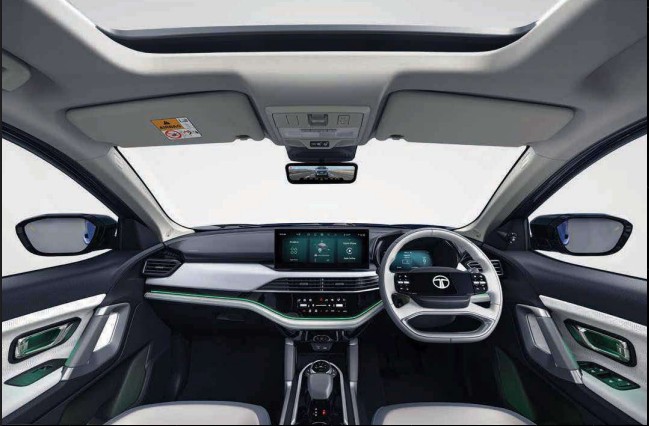
The Harrier EV makes more sense for families, especially if rear-seat comfort, road presence and long-distance touring matter more than sporty handling.
And there is one thing the BE 6 simply cannot match:
AWD/QWD.
The Harrier’s dual-motor system gives it 504Nm, six terrain modes and genuine all-wheel-drive capability. Tata specifically positions the QWD system for off-road use, with features such as Rock Crawl and other terrain modes.
If you regularly drive on rough roads, steep terrain, wet surfaces or simply want the confidence of two driven axles, the Harrier EV is the obvious choice.
Also Read : Mahindra BE 6 SPORTEQ vs TATA SIERRA EV Comparison
Mahindra BE 6 SPORTEQ vs Tata Harrier EV: Final Verdict
The Mahindra BE 6 SPORTEQ wins the value and performance-oriented argument.
At ₹19.45 lakh, it undercuts the Harrier EV’s ₹21.69 lakh starting price, while the 79kWh version offers up to 683km of claimed range and 210kW of power.
The Tata Harrier EV wins on size, family practicality and AWD capability. Its dual-motor version is also the quicker car on paper, with 504Nm and a claimed 0–100km/h time of 6.3 seconds.
So my advice is simple:
For a young buyer, enthusiast or city user: BE 6 SPORTEQ
For a family wanting space and comfort: Harrier EV
For long-range RWD touring: BE 6 SPORTEQ 79kWh
For rough roads, hills and maximum traction: Harrier EV AWD
And if I had roughly ₹23–25 lakh to spend, I’d personally look very closely at the BE 6 SPORTEQ 70kWh/79kWh variants. The 70kWh version in particular looks like the sweet spot of the new lineup, while the Harrier EV becomes increasingly compelling once your priorities shift from sporty driving to space, comfort and all-weather capability.
In other words, this isn’t really a question of which EV is “better.” It’s a question of whether you want a sporty electric crossover that happens to be an SUV—or a proper family SUV that happens to be electric.